A working PCBA, proof-of-concept, or product specification is the starting point, not a finished card design. Battery thickness, antenna clearance, sound openings, button travel, e-paper protection, and production test access all change the card body. In a cold lamination smart card OEM/ODM project, these inputs are converted into a controlled stack-up, tested in the complete card, and released through pilot production.
In this guide, cold lamination smart card manufacturing means a process route that combines room-temperature potting or filling, component positioning, material stack-up, pressing, and curing around embedded electronics. Yuli also uses cold-pressed smart card manufacturing for the same project family. The terminology needs a definition because “cold press” can also name a station in a conventional card-production line. The process should be identified by its materials, temperature and pressure window, component limits, and finished-card tests rather than by the label alone.
What is cold lamination smart card manufacturing?
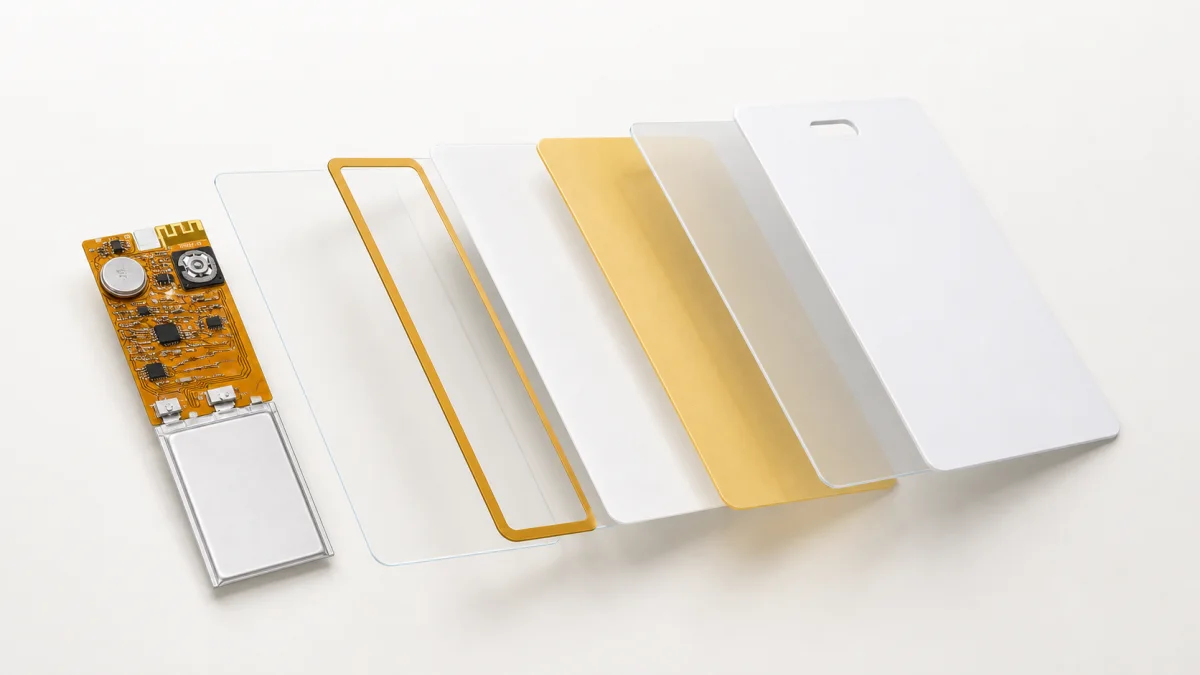
Cold lamination smart card manufacturing integrates a reviewed PCBA, thin battery, buzzer, button, e-paper module, NFC or BLE antenna, sensors, and other project-approved components into a card stack matched to their height and load limits. Room-temperature filling and pressing form the card around those electronics without relying on the same high-temperature lamination window used for many conventional passive cards.
Cold lamination and hot lamination serve different constructions. Passive contact, contactless, and dual-interface cards already have mature hot-lamination, milling, and module-embedding processes. Products with heat-sensitive components, uneven component heights, display windows, acoustic openings, or local reinforcement need a process window matched to their electronics and card structure. Our cold lamination vs hot lamination guide covers the main selection factors.
Embedded electronics change the card body
ISO/IEC 7810 addresses the physical characteristics of identification cards. ISO/IEC 18328-2 expands the design context to cards that carry devices such as power sources, displays, sensors, microphones, loudspeakers, buttons, or keypads. These standards are useful boundaries, but they do not decide whether a particular PCB assembly can survive a particular potting compound or pressing cycle. That decision comes from the component layout and the qualification evidence for the finished construction.
For an embedded-electronics smart card, every component creates a manufacturing question. The battery needs edge protection and controlled compression. A buzzer needs an acoustic path that adhesive and cover materials do not block. The antenna needs clearance from metal, battery foil, displays, and decorative layers. A button needs controlled travel through the outer layer. E-paper needs localized pressure protection and a stable electrical connection. Test points must remain reachable before the card is closed, or the project needs another programming and test strategy.
| Component | Typical manufacturing risk | Prototype and pilot-build evidence |
|---|---|---|
| Thin battery | Local thickness, edge pressure, tab strain, self-discharge, or assembly damage | Incoming condition, retention method, post-press voltage, standby current, and appearance |
| BLE or NFC antenna | Detuning caused by filling material, metal, battery foil, printing, or insufficient clearance | Finished-card RF performance, pairing or reading behavior, orientation, and lot consistency |
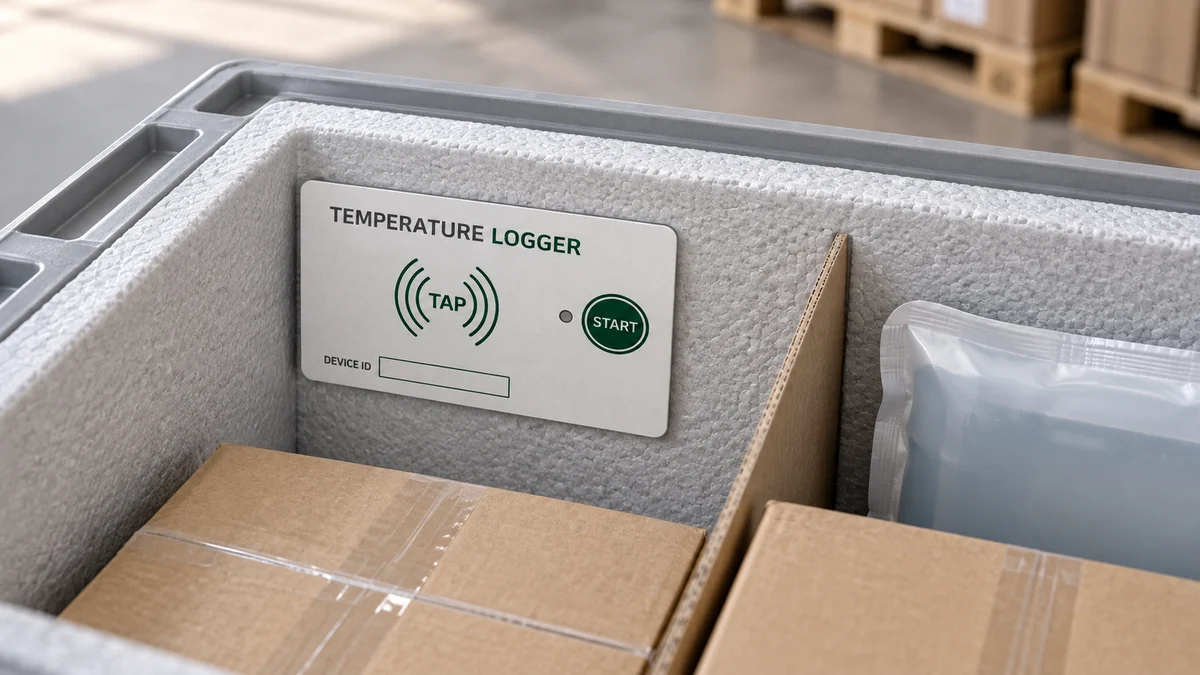
| Buzzer | Adhesive damping, misplaced sound opening, or inadequate cavity volume | Sound function in the finished card, opening alignment, assembly tolerance, and environmental checks |
| Button | Cover stiffness, spacer height, and adhesive thickness alter tactile response | Actuation force, return, trigger stability, and end-of-line function |
| E-paper | Localized window pressure, edge stress, refresh power, or FPC strain | Window protection, refresh function, flatness, and display condition after mechanical tests |
| Test pads and connectors | Filling material blocks access for programming, serialization, or functional test | Fixture access, programming method, test coverage, and traceability |
A PCBA cold lamination review combines the Gerber files with the BOM, maximum component heights, mechanical drawing, card openings, antenna keep-out, battery information, intended tests, and use environment. When the customer supplies a working board, Yuli first checks whether it is suitable for direct integration. Structural conflicts may lead to component relocation, test-pad changes, outline cleanup, or height redistribution before stack-up design begins.
From PCBA review to a finished cold-laminated smart card
The project normally moves through six engineering and production stages. Each stage produces information needed for the next release.
| Gate | Engineering work | Expected output |
|---|---|---|
| 1. Requirements and PCBA review | Confirm product form, dimensions, components, interfaces, antenna, power, and target tests | Risk register, missing inputs, and an initial manufacturability decision |
| 2. Stack-up and material design | Allocate thickness and define protective layers, filling zones, openings, and local reinforcement | Proposed stack, critical clearances, and prototype material set |
| 3. Engineering prototype | Trial the potting, positioning, pressing, appearance, and basic function | Measurable samples, issue log, and revision actions |
| 4. Joint validation | Check RF, current, acoustics, button response, display, flatness, and appearance on the same build | Test records, failure causes, and design-freeze conditions |
| 5. Pilot build | Exercise tooling, work instructions, material lots, inspection, and production test | Pilot report, process controls, and acceptance criteria |
| 6. Production release | Build the frozen revision under controlled process, test, and change management | Lot records, outgoing inspection, and agreed delivery documentation |
OEM and ODM are different delivery models
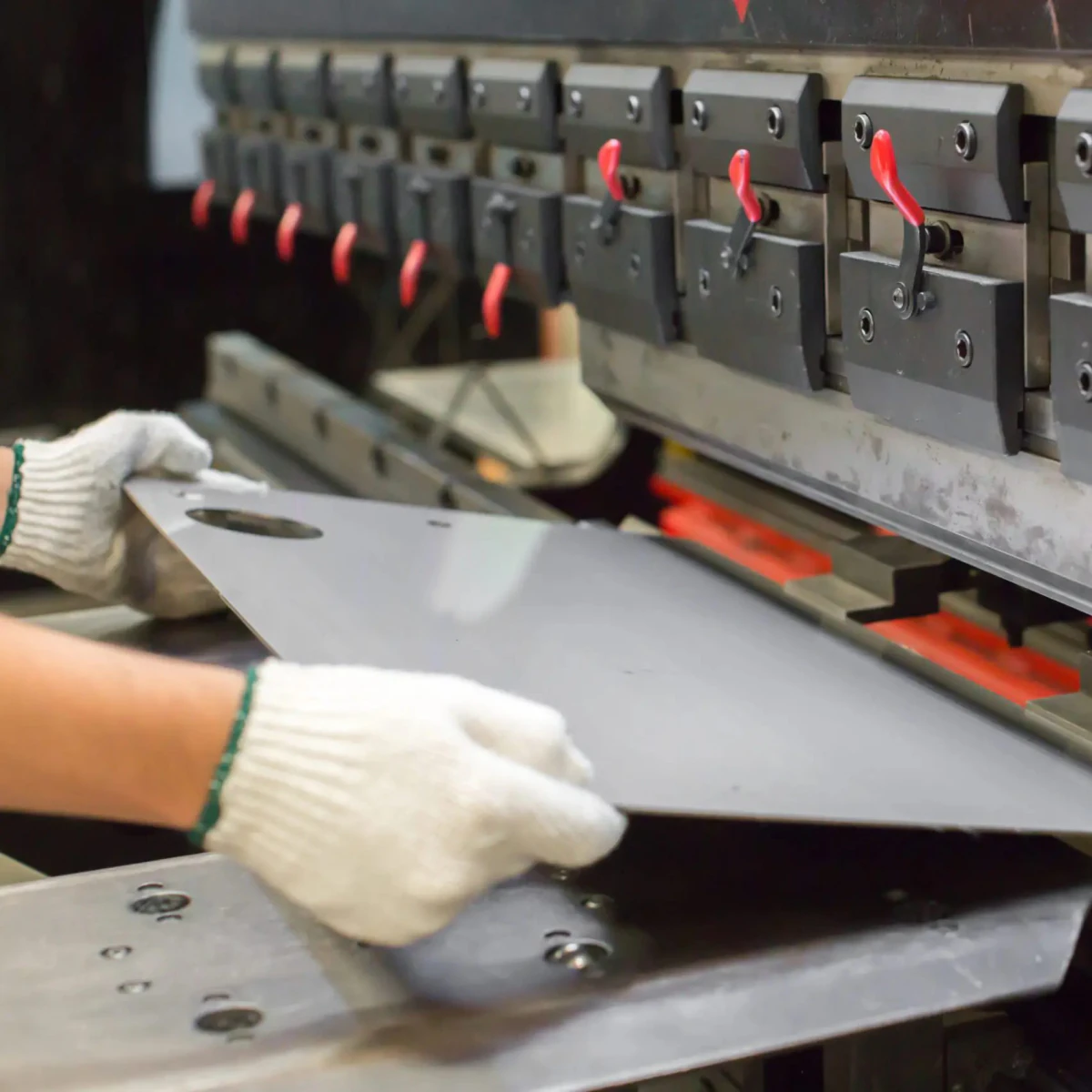
In an OEM engagement, the customer normally owns the product definition, mechanical direction, and PCBA. Yuli’s work centers on cold-press DFM, stack-up development, prototypes, pilot builds, card manufacturing, and production test. This route is appropriate when the electronics are mature and the remaining challenge is turning them into a repeatable thin-card construction.
In an ODM engagement, the customer may begin with the launch market, required functions, industrial-design direction, and commercial targets. Yuli can add solution customization, hardware engineering, component and power evaluation, antenna and acoustic integration, certification support, prototypes, and manufacturing introduction. Firmware may be an agreed project deliverable, but it is not a standalone headline service. The scope has to identify who owns the application, cloud, ecosystem account, industrial design, certification applicant, and final product requirements.
| Customer controls | Yuli can deliver | Joint decisions |
|---|---|---|
| Product definition, industrial and mechanical direction, brand, market, channel, and commercial requirements | Solution customization, hardware engineering, cold-press DFM, prototypes, pilot builds, production test, and card manufacturing | Target specification, sample acceptance, test conditions, certification applicant, design freeze, and change process |
| Customer-owned ecosystem accounts, program applications, and existing intellectual property | Agreed firmware adaptation, antenna and acoustic work, and certification-document support | Deliverable files, reports, packaging, and production gates |
Customers with a mature board can start with customer PCBA cold-press integration. Programs still defining the solution should review OEM/ODM cooperation and delivery. Explicit ownership prevents a common late-stage problem: the sample works, but mechanical, firmware, certification, and test responsibilities were never part of the same release plan.
What buyers should prepare before requesting a quotation
An RFQ can start before every production drawing is complete, provided the engineering team can see the main product constraints. The first package should cover:
- product use, launch markets, and expected environment;
- target form factor, dimensions, attachment method, and appearance;
- PCBA files, BOM, maximum component heights, or clear prototype photographs;
- battery, buzzer, button, e-paper, sensor, NFC, and BLE configuration;
- required windows, openings, printed areas, surface finish, and brand zones;
- RF, current, acoustic, display, bending, drop, and environmental expectations;
- certification plan, prototype timing, pilot quantity, and forecast volume; and
- consigned material, Yuli-sourced material, packaging, and delivery boundaries.
With these inputs, engineering can identify thickness conflicts, antenna blockage, inaccessible test pads, unsuitable battery handling, and approval-schedule conflicts before quotation. Buyers can use the RFQ checklist to submit a structured project package.
How to qualify a cold lamination smart card manufacturer
A clean prototype confirms appearance and basic function. Supplier qualification also covers how the stack-up was selected, how critical parts are protected, what is measured before and after pressing, and how the pilot revision becomes a controlled production release.
- Engineering review before quotation. A quote based only on card area and quantity usually misses the risks created by embedded electronics.
- Pre- and post-press test coverage. Incoming PCBA function and finished-card current, RF, buttons, sound, and display should follow the actual configuration.
- A real pilot-build gate. Tooling, material lots, operator instructions, programming, inspection, and test time need to run before volume release.
- Revision and lot traceability. BOM, process, test software, and cosmetic changes need records and approval.
- A clear certification boundary. A manufacturer can support preparation, pre-compliance, and corrective engineering. Final certification applies to the submitted product and formal test result.
Product formats that can use the process
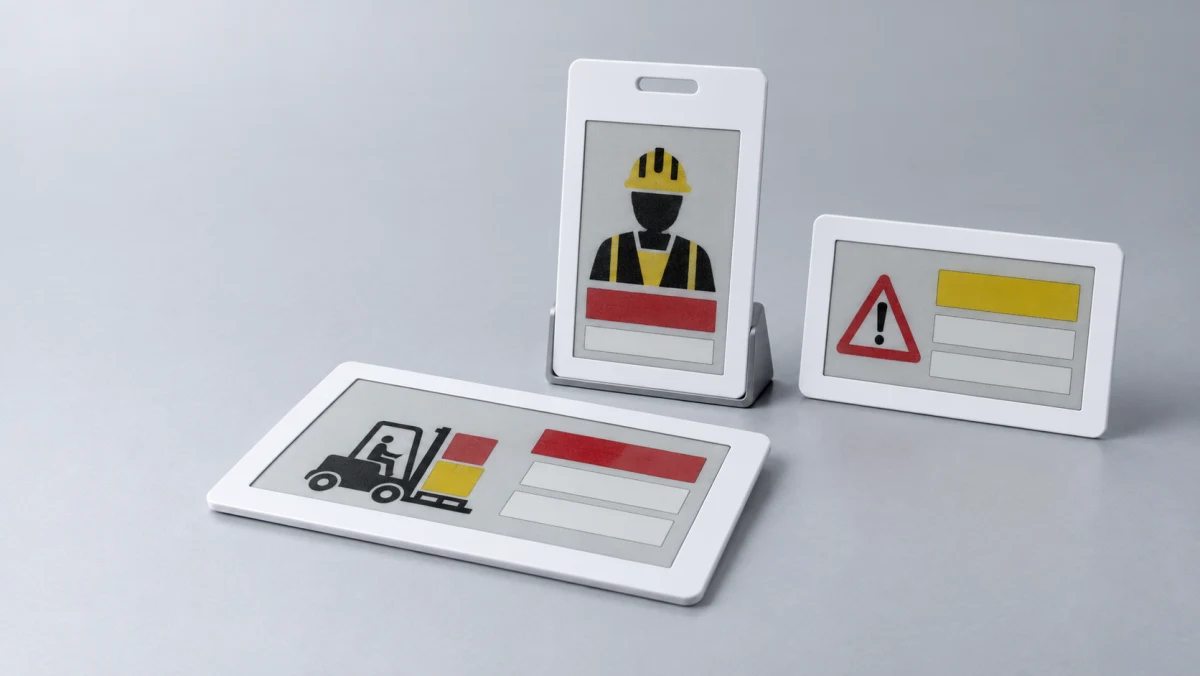
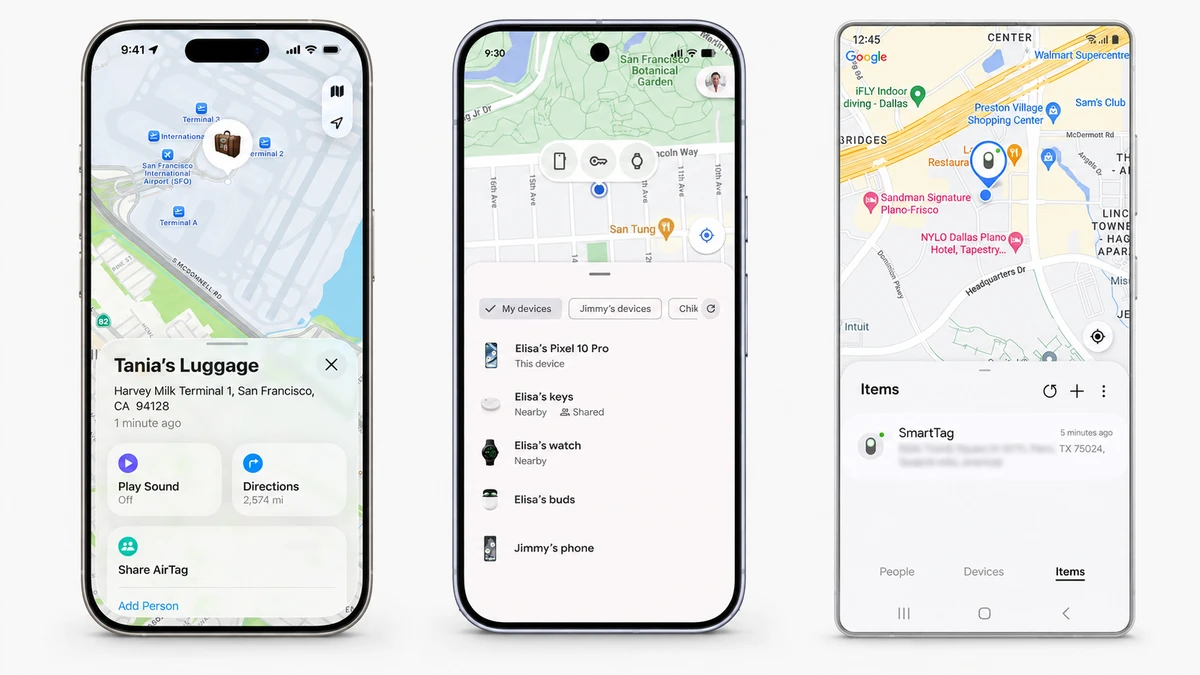
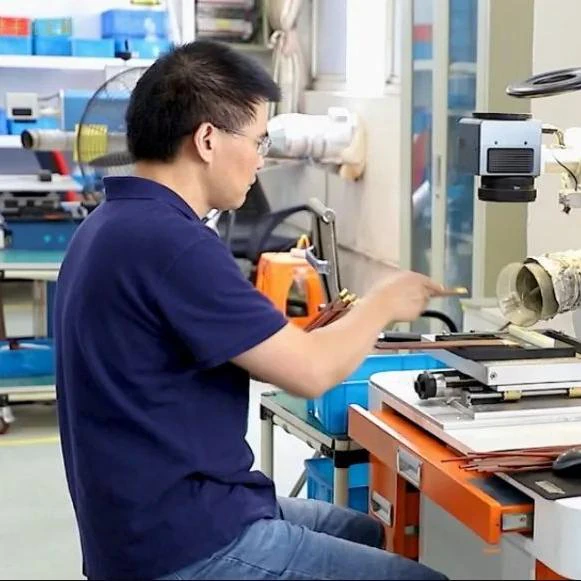
Cold lamination is not limited to a standard tracker card. The process can support a battery-powered location card, e-paper smart card, smart personnel badge, flexible asset label, light-energy-assisted card, or another thin carrier for a customer-designed PCBA. Those products may share a manufacturing family, but they do not share one universal stack-up. Display windows, antennas, batteries, buttons, acoustic paths, and attachment methods create different validation conditions.
For a brand, engineering company, or system integrator, the finished product must operate in its intended structure, remain testable in production, and repeat the approved sample across material lots and operators. Yuli connects solution engineering with cold-pressed card manufacturing. The product forms on this website describe customizable project platforms rather than a consumer retail line.
Cold lamination vs hot lamination: choose the process window
Traditional smart-card production often laminates printed and inlay sheets under controlled heat and pressure, then adds modules or completes later finishing steps. Complex electronic cards may instead use cavities, embedded subassemblies, local protection, potting, or alternative lamination sequences. In some equipment documentation, “cold press” names the pressure-and-cooling stage that follows hot lamination; in complex-card projects, the same term is also used more broadly for low-temperature integration and pressing around electronic modules.
Because the terminology varies, the sourcing specification should state the actual process window: material system, temperature at the electronics, supported pressure areas, void-control method, cure conditions, and finished-card release tests. “Cold lamination smart card” is a useful procurement term, while these parameters define the manufacturing route.
Frequently asked questions
Is a cold-laminated smart card the same as a cold-pressed smart card?
On Yuli’s website, the terms describe the same room-temperature potting, stack-up, pressing, and curing project family. Cold lamination smart card is useful in international process and sourcing searches; cold-pressed smart card is Yuli’s established English term. The project specification should still define the materials, thermal exposure, pressure support, and qualification tests.
Can Yuli cold-press a customer-supplied PCBA?
Yes, after a manufacturability review. A board with suitable outline, height distribution, interconnects, antenna placement, and test access can move into stack-up design. A board with conflicts may need localized changes first. The decision is based on the customer’s actual files and samples.
Is cold lamination always suitable for a battery or e-paper card?
No. Component pressure limits, window construction, overall thickness, material compatibility, bending expectations, and use environment all matter. A lower-temperature process creates a more flexible integration window, but it does not remove the need for prototype and finished-card validation.
What determines the OEM/ODM quotation?
The main factors are engineering maturity, board and component complexity, card stack, materials, tooling, test coverage, certification support, pilot scope, packaging, and volume. A mature build-to-print project and an ODM project at functional-definition stage require different work. Yuli first identifies missing inputs and project boundaries, then prepares the formal proposal.
Which finished-card tests should be planned?
The plan should match the product and its end use. Typical categories include appearance and dimensions, standby and operating current, BLE or NFC performance, button response, sound, display refresh, programming and serialization, and project-specific mechanical or environmental checks. Test conditions and acceptance limits must be agreed for the actual design.
Send the target form factor, PCBA, critical components, test expectations, certification plan, and forecast volume. Yuli can review the solution boundary, PCBA cold lamination path, prototype gates, and pilot-build requirements. Submit a project inquiry or review our advanced cold-pressed smart card manufacturing capability.