Lighting condition
Indoor lighting, outdoor light, shading ratio, and product position directly affect energy harvesting. Luggage tags, wallet cards, and asset labels have different usage conditions.
 Yuli Intelligent
Product / Light-Energy Tracker Card
A light-energy tracker card integrates flexible photovoltaics, energy storage, low-power BLE, a buzzer, and cold-pressed packaging for tracker, luggage-label, and asset-label projects with repeatable light exposure.
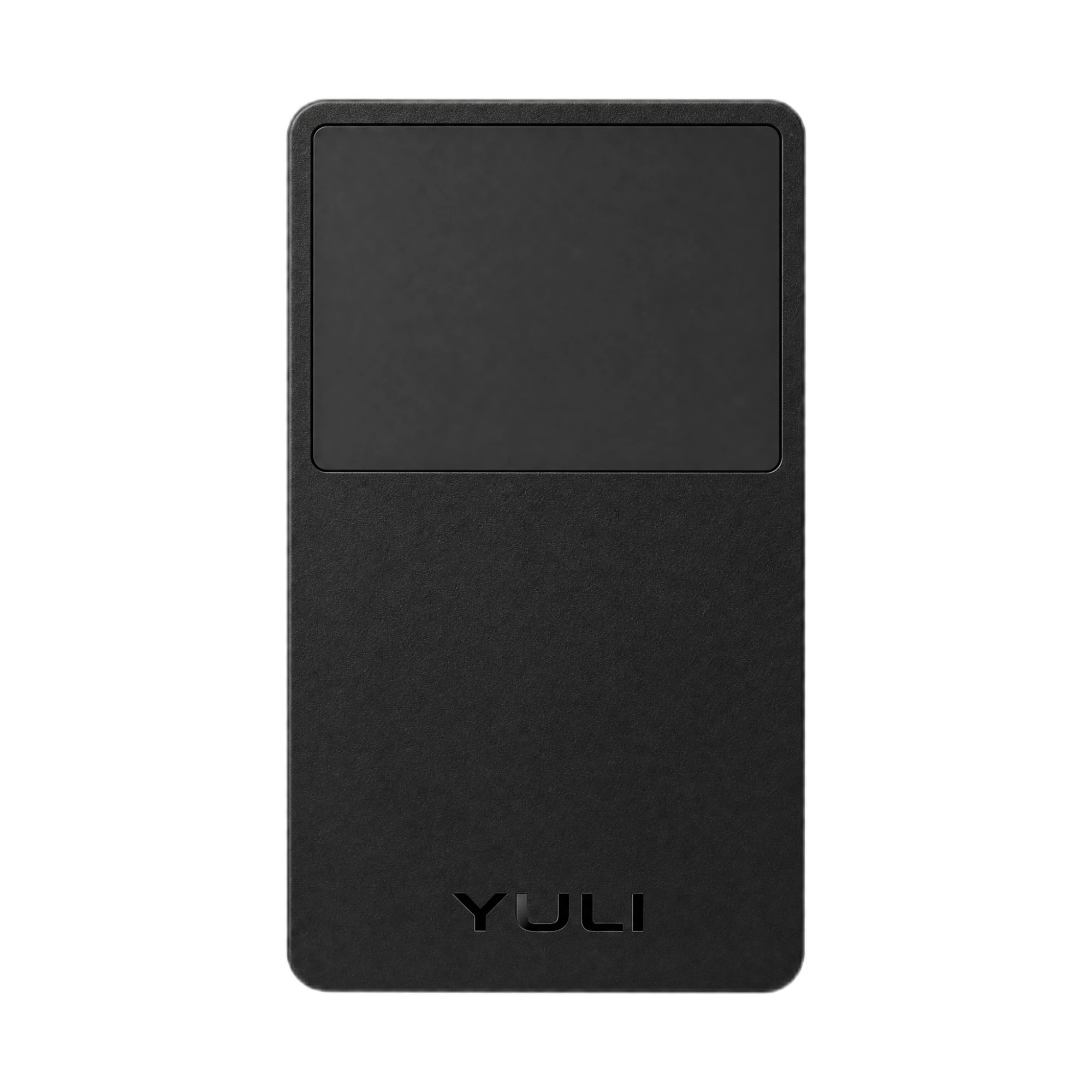
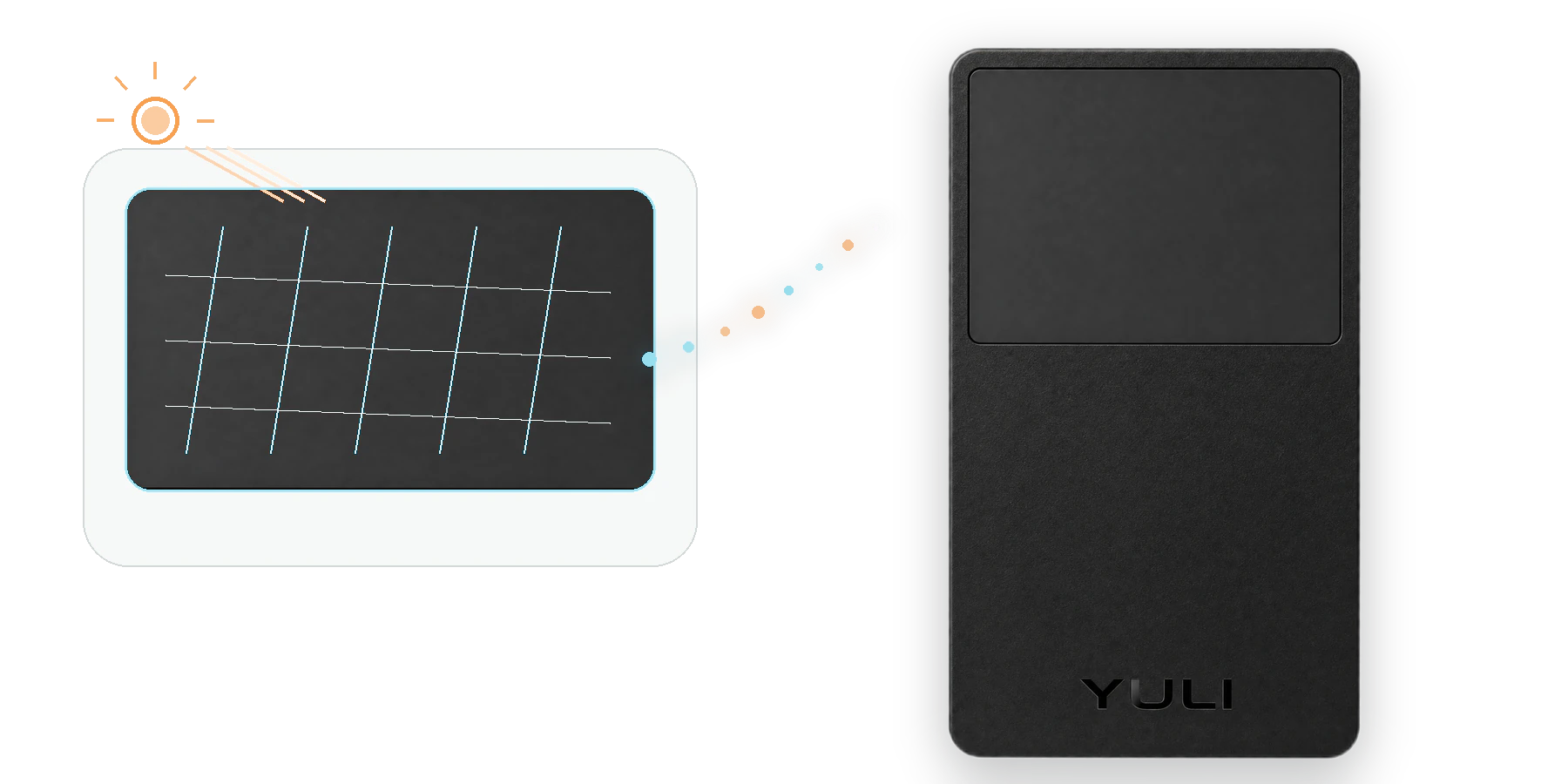
Product Structure
Flexible PV provides the energy input. Supercapacitor storage, power management, low-power states, and advertising strategy determine whether that energy is useful. Cold pressing integrates PV, PCBA, storage, and surface layers into a stable body.
Indoor lighting, outdoor light, shading ratio, and product position directly affect energy harvesting. Luggage tags, wallet cards, and asset labels have different usage conditions.
Supercapacitor capacity, leakage current, temperature range, and protection circuit must match standby current, not just a single component spec.
PV window area, transparent material, abrasion resistance, and brand finish affect each other and should be designed with surface process.
Use Cases
Light-energy tracker cards fit products with repeatable light exposure and a goal of reducing charging or battery replacement. Long dark periods still require adequate storage margin and low-power operation.
| Recommended scenarios | Luggage label, premium tracker card, enterprise asset label, gift card, low-maintenance card device |
|---|---|
| Operating conditions | Maintenance frequency, harvesting efficiency, and battery-life performance must be tied to lighting environment, usage frequency, and test conditions. |
| Test focus | Lighting profile, storage capacity, standby current, buzzer frequency, surface wear resistance, and waterproofing requirements |
| Related content | Standard Tracker Card · FindMy Low-Power Design · RFQ |
Share product form, dimensions, photovoltaic window, typical lighting, dark time, buzzer requirement, ecosystem, validation needs, and volume.
Three Lighting Scenes
Illuminance describes light as perceived by the eye and does not directly equal photovoltaic electrical power. Record illuminance, spectrum or source, PV voltage and current, angle, shading, temperature, and effective duration for each scene.
Record typical office, retail, or home positions. Lamp spectrum, distance, operating hours, and product orientation strongly affect harvesting.
Separate direct and diffuse light, glazing transmission, orientation, and season. Window-side exposure is not constant sunlight; record effective hours.
Record clear, cloudy, shaded, temperature-rise, and mounting-angle conditions. Strong light can raise input while increasing thermal and material-aging risks.
Energy-Budget Model
Daily harvesting depends on measured PV current, effective exposure hours, and usable power-path ratio. Daily consumption comes from system average current over 24 hours. Their difference is the daily net balance.
Test Record
Record the sample ID, light source, illuminance, incidence angle, PV voltage and current, effective exposure time, finished-device average current, and storage state. Keep separate records for indoor, window-side, and outdoor conditions.
Reading the result: A positive daily balance means harvesting exceeded consumption. A negative balance means the battery or supercapacitor must supply the difference.
| Scene | Lighting conditions | PV output | Exposure per day | Device average current | Daily result |
|---|---|---|---|---|---|
| Indoor | Lamp, lux, angle | V / μA | h/day | μA | Harvest − use |
| Window-side | Orientation, weather, shading | V / μA | h/day | μA | Harvest − use |
| Outdoor | Weather, angle, temperature | V / μA | h/day | μA | Harvest − use |
Operating Conditions
A tracker inside a card holder may remain dark, luggage-label orientation changes, and an asset-label mounting surface may shade the photovoltaic window. Record dark time, shading, and orientation, then validate storage margin in the final structure.
Measure voltage, current, and temperature with target PV and final optical surface under real sources and angles.
Convert FindMy advertising, connections, buzzer use, and sleep into daily system consumption.
Use available supercapacitor or storage capacity to calculate continuous dark operation.
Three-Scene Measurement
Enter illuminance, PV voltage and current, effective exposure, and average system current for indoor, window-side, and outdoor conditions. Daily harvest, use, and net balance are calculated locally.