On June 26, 2026, the World Power Bank Conference brought the mobile-power supply chain together in Shenzhen. Yuli Intelligent used the event to introduce an integrated “new safety standard + FindMy” power-bank solution. Rather than treating Bluetooth as an isolated add-on, the platform connects battery-state monitoring, readable product data, low-power item finding, wireless-charging authentication support, and production engineering in one development path.
Chinese power-electronics publication Chongdiantou reported before the conference that item finding had become one of the event’s notable product directions. Its coverage described Yuli’s ability to support embedded finding functions across thin magnetic, built-in-cable, and multi-port power banks. The practical question for brands is no longer whether a power bank can carry another feature. It is how to meet stricter safety and data-management expectations while creating a benefit users can understand beyond capacity, wattage, and connector count.
The new standard makes product data part of safety engineering
China’s mandatory national standard GB 47372-2026, Safety Technical Specification for Power Banks, was published on March 31, 2026 and takes effect on April 1, 2027. It places cells, protection circuitry, finished-product behavior, and production quality control in a more complete framework. Public regulatory explanations emphasize the monitoring, storage, and readability of key safety information such as voltage and temperature.
That changes the role of electronics around the battery. Voltage, current, temperature, cycle count, state of charge, battery health, abnormal events, and service access need coordinated hardware, firmware, communications, and application support. For a brand with a proven power architecture, replacing the entire platform may add schedule and certification risk. An incremental subsystem can be more useful when its limits are clearly understood.
The M1 module adds management capability to an existing platform
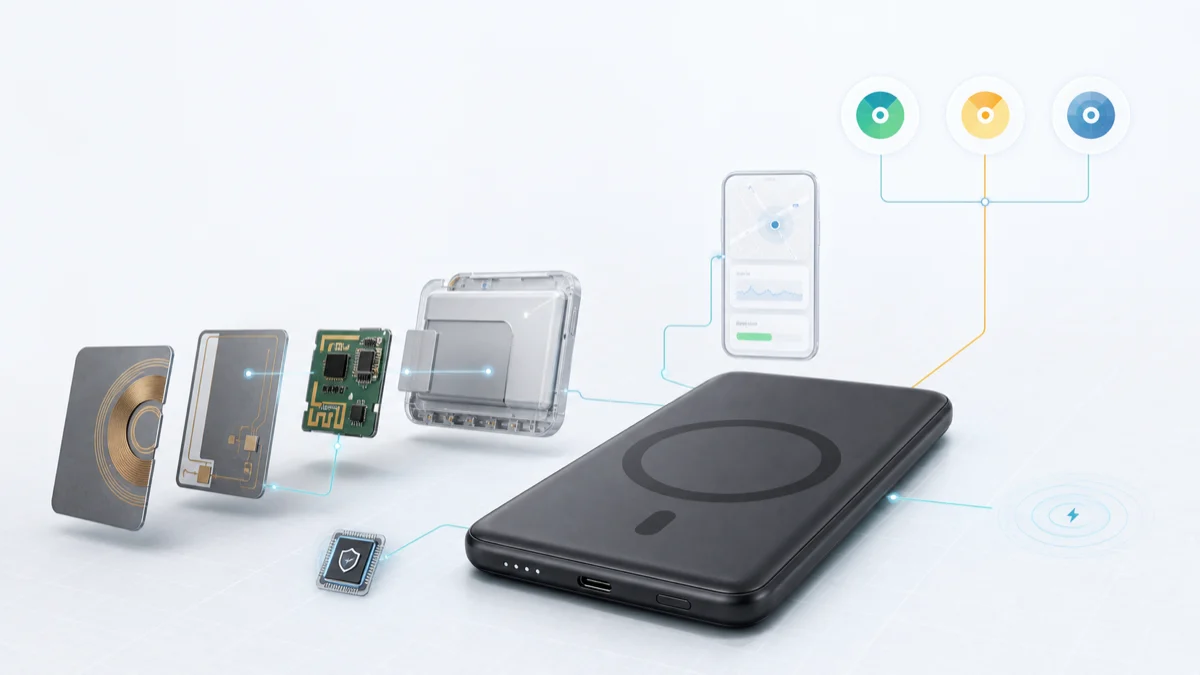
Yuli’s conference material presented the M1 as an external smart-management module for integration with an established power-bank controller. I2C or UART can carry voltage, current, temperature, cycle-count, and related state data. The software package can include OTA support, an SDK, protocol documentation, and reference code so that the customer can connect the hardware to its own product and application environment.
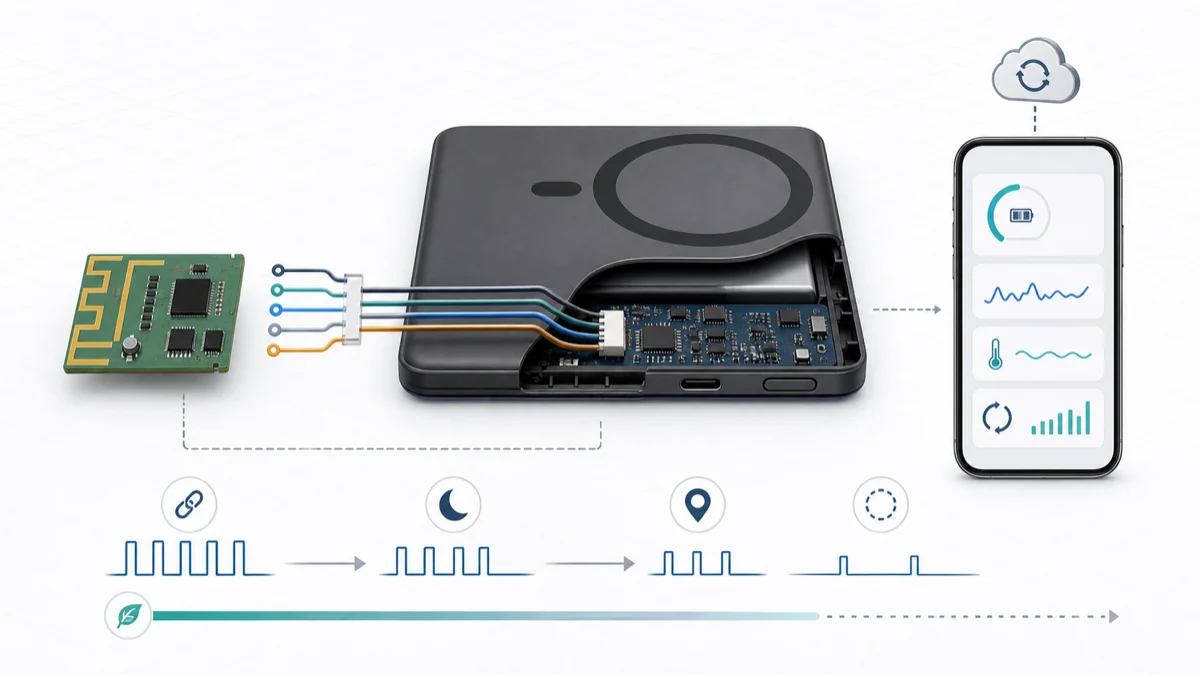
No module by itself makes a complete power bank compliant. Cell selection, protection, construction, thermal behavior, abnormal conditions, production consistency, and certification evidence still belong to the final model. Yuli’s scope is to provide hardware and software designed around the new data-management requirements and to support the customer’s finished-product certification work. Compliance is established by the test and approval results for that product.
One device can address both range anxiety and loss anxiety
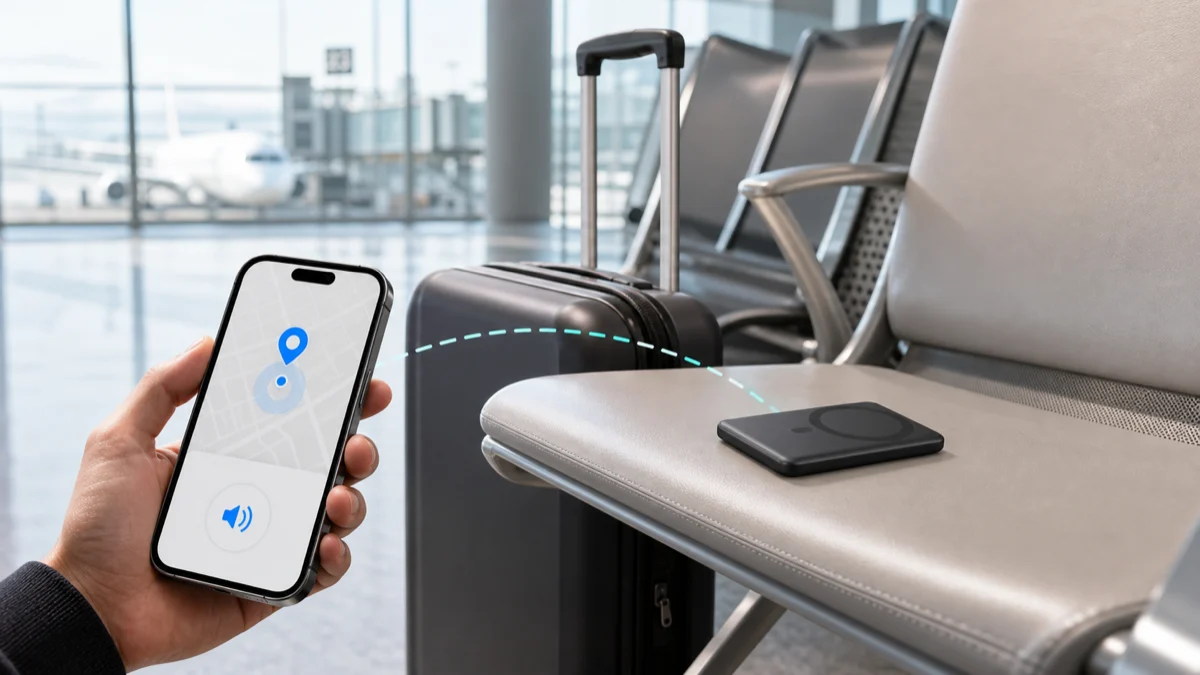
Power banks travel through commutes, airports, trade shows, hotels, and outdoor trips. They are frequently borrowed, moved between bags, or set down during charging. This makes a remembered-last-location, left-behind alert, and nearby audible search useful in ways that are easy for an end user to understand.
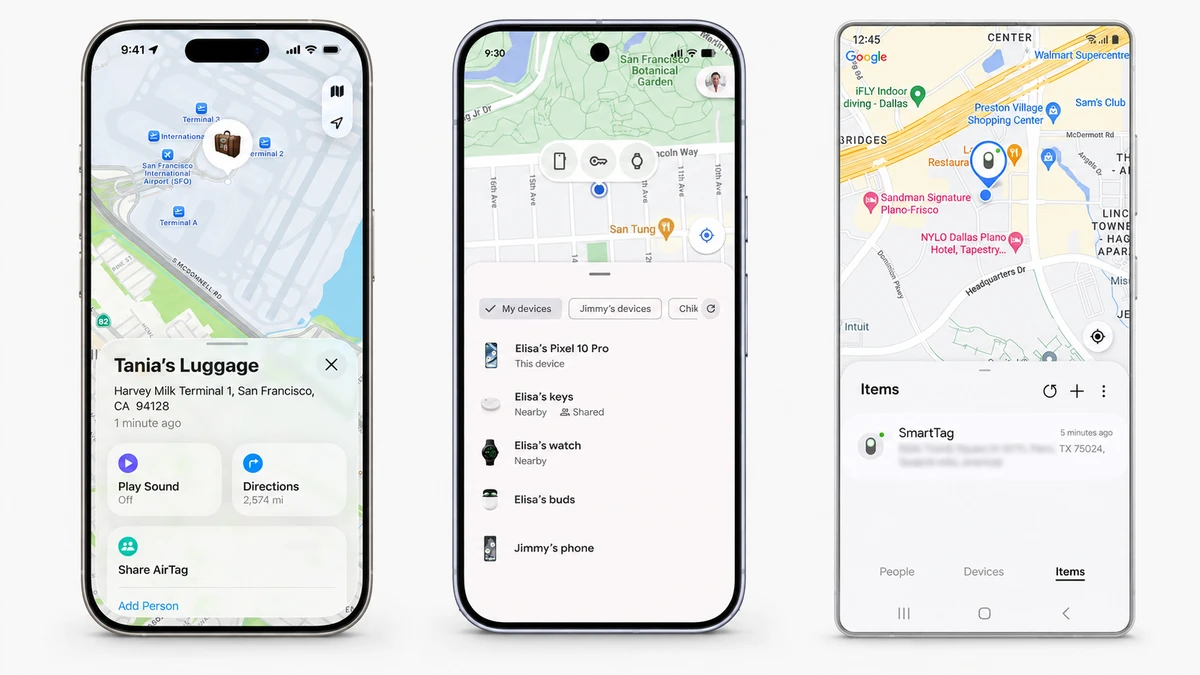
Yuli can evaluate separate project routes for Apple Find My, Google Find Hub, and Samsung SmartThings Find. The ecosystems have different program owners, hardware requirements, firmware rules, privacy behavior, and approval processes. They are not three checkboxes added to one universal firmware build. A brand should choose the route from its launch markets and customer-device mix before freezing silicon, antenna placement, acoustics, power architecture, and certification timing.
Low power is a state budget, not a single sleep-current number
Pairing advertisements, connected operation, separated operation, button events, security processing, sound, and fault recovery all contribute to energy use. Yuli’s conference deck disclosed a set of engineering measurements to describe the optimization direction of its reference design.
| Measured state | Yuli reference sample | Comparison range in the deck |
|---|---|---|
| Pairing advertising | 191 µA | 480–718 µA |
| Deep sleep | 0.95 µA | 3.4–4.3 µA |
| Nearby average | 6 µA | 15–25 µA |
| Separated average | 6 µA | 11–30 µA |
The same material targets roughly two years for a standard Tag configuration and more than five years for an optimized tracker-card configuration. These are reference-sample results under specific hardware, firmware, battery, and laboratory conditions, not universal guaranteed specifications. Production life changes with the platform, advertising interval, cell capacity and self-discharge, sound usage, temperature, and radio environment.
A charged main cell does not automatically guarantee that the finding subsystem stays available. A project must decide whether it runs from the main cell, an independent cell, or a managed dual-source architecture, then validate low-charge, shutdown, transport, and long-storage behavior.
Qi2.2 and NFC add identity to the charging path
For magnetic wireless power banks, Yuli’s platform also considers Qi2.2-related certification support and NFC identity. The conference material outlines secure-device building blocks such as unique identity, ECC P-256/ECDSA, ECDH, hardware random numbers, secure key storage, and protected I2C communication.
Those components support an authentication architecture; they do not replace formal approval. WPC certification, ecosystem marks, and shipping authorization are decided for the finished product by the relevant program. Yuli can support component selection, schematics and PCB design, firmware interfaces, prototype documentation, pre-compliance work, and corrective engineering.
The difficult work starts when every subsystem meets inside the product
A power bank has little unused space. The cell, wireless-charging coil, magnets, shielding, power electronics, and housing can detune a Bluetooth antenna. Sound openings and cavity volume change audible performance. Added wiring and test points can complicate assembly. When fast charging, wireless charging, battery monitoring, and item finding share one enclosure, joint DFM must happen before the mechanical design is frozen.
The customer owns the product definition, industrial-design direction, brand, and channel. Within an agreed project scope, Yuli supports custom hardware, firmware adaptation, certification preparation, prototypes, pilot production, and card-class manufacturing. For power banks, Yuli’s contribution is an embedded management and finding subsystem developed with the customer’s finished-product team. Cold-press manufacturing applies separately to thin tracker cards, badges, e-paper cards, and flexible labels; it does not describe the power-bank enclosure.
Three practical ways to start
| Project entry | Best fit | First decisions |
|---|---|---|
| Smart-management upgrade | An existing platform needs readable battery data and app connectivity | Controller interface, available data, app ownership, event storage, OTA, and certification plan |
| Embedded FindMy route | A magnetic, cable-integrated, or multi-port product needs differentiation | Markets, Apple/Google/Samsung route, antenna space, acoustics, power, and platform applicant |
| Combined development | A new model is planning management, wireless authentication, and finding together | System block diagram, mechanical stack, energy budget, tests, prototype gates, and volume |
A useful first package includes launch markets, product form, power and capacity, cell and controller platform, mechanical drawings, available PCB volume, power-source strategy, target finding ecosystem, app requirements, certification plan, prototype timing, and forecast volume. Better inputs reveal antenna, thermal, interface, power, and mechanical conflicts while they are still inexpensive to change.
Safety readiness and product differentiation can share one roadmap
GB 47372-2026 brings the power-bank industry back to fundamentals: battery safety, readable evidence, and production control. Item finding adds a user-visible reason to choose one product over another. Together, they can turn a power bank from a passive reserve battery into a connected device that reports its state and leaves a recovery path when forgotten.
Yuli’s role is to close the engineering distance between that product idea and repeatable production: connect the hardware, adapt the firmware, measure the real state budget, fit radio and acoustics into the enclosure, prepare approval evidence, and resolve prototype issues before pilot build. For brands planning products for 2027 and beyond, bringing those decisions into product definition early makes regulatory readiness and differentiation much easier to manage together.