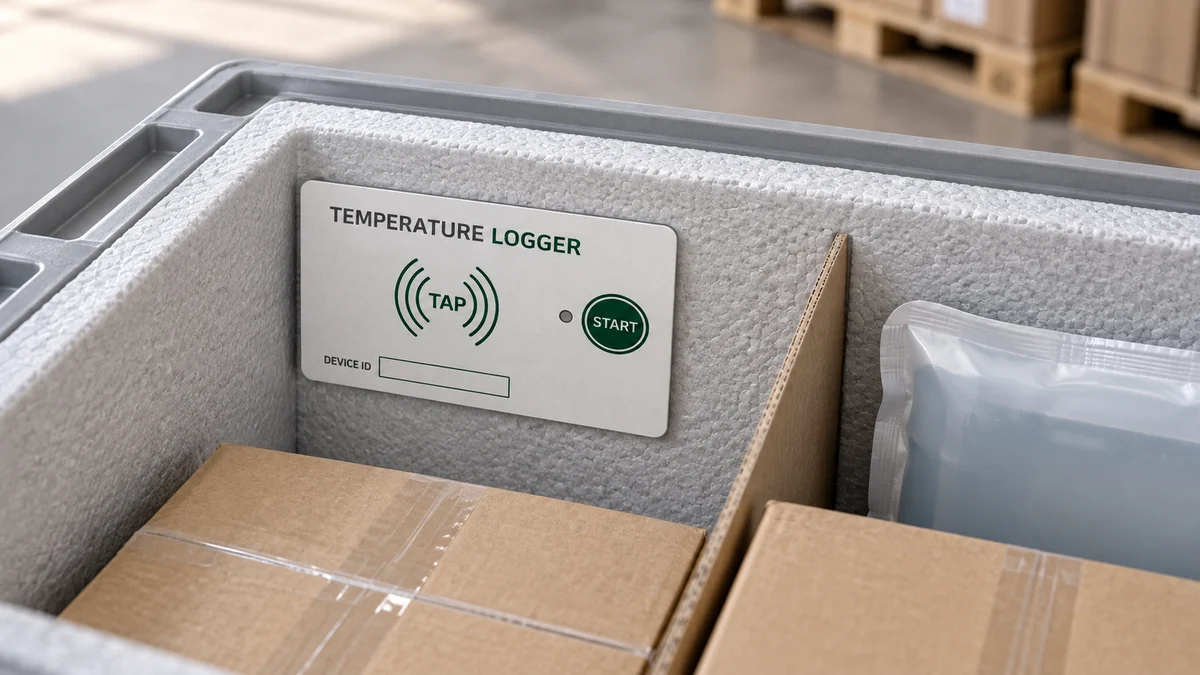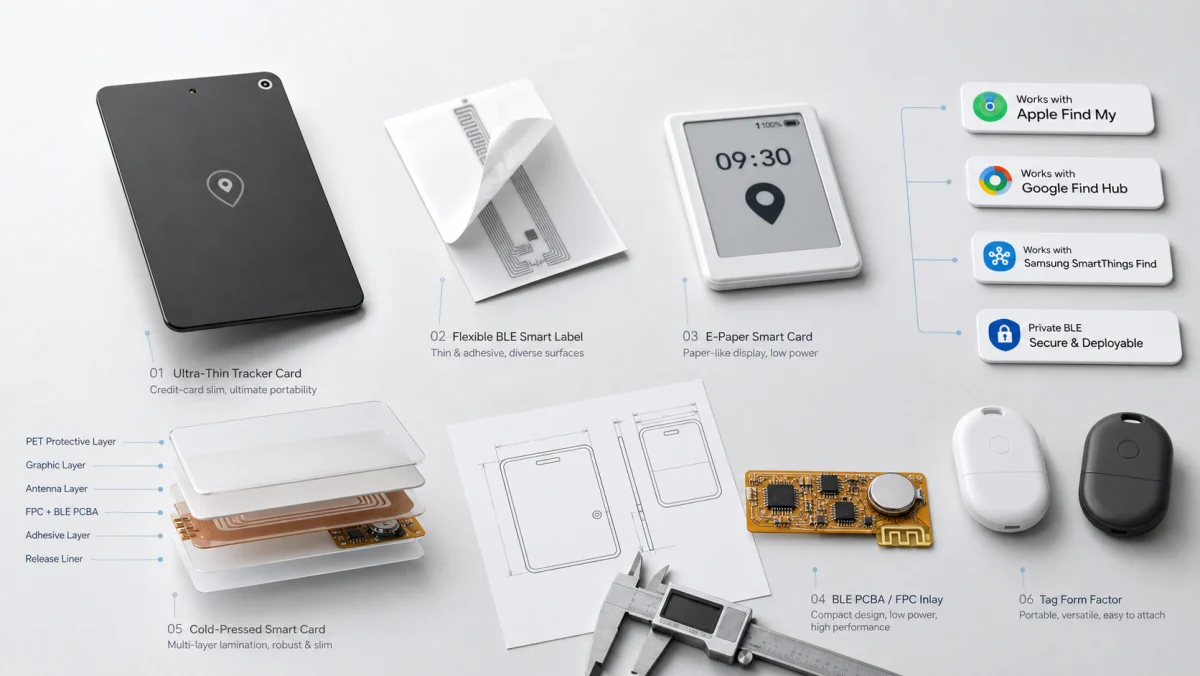
For a brand launching a tracker card, key tag or a product with built-in finding, the first question is which phones its customers use. Apple Find My, Google Find Hub and Samsung SmartThings Find all help people recover misplaced belongings. They differ in phone compatibility, setup, nearby finding and the requirements for bringing a branded accessory to market.
Those differences reach beyond the app. A promise such as "find your wallet nearby" may require an audible alert; a directional arrow and distance reading require a supported precision-finding implementation. The feature list on the box has consequences for the radio, battery, card thickness and cost.
Yuli provides FindMy solution customization and cold-pressed smart card manufacturing for brands developing cards, tags and embedded accessories. This comparison covers the customer experience first, then the OEM development and manufacturing decisions behind it. The Yuli product matrix connects those decisions to specific product formats and customization options.
 Apple Find My
 Google Find Hub
 Samsung SmartThings Find
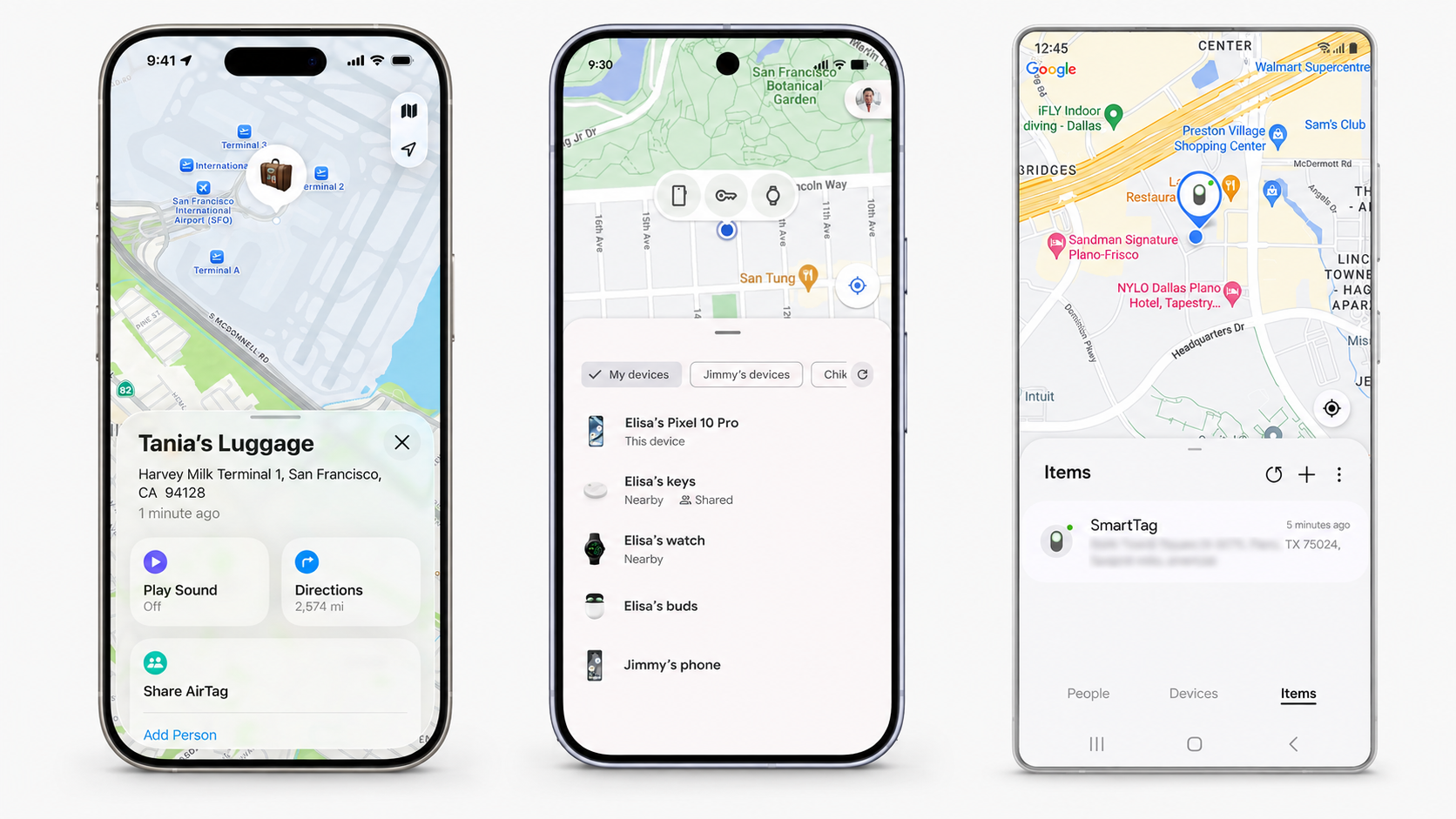
The shared principle: Bluetooth plus a crowdsourced finding network
A card or tag sends Bluetooth Low Energy signals. When a participating phone or other supported network device passes nearby, it can detect the accessory and relay an encrypted location report. The owner sees the reported location in the ecosystem's app. The reporting device supplies the location estimate; an ordinary Bluetooth tracker does not need its own GPS receiver or SIM card.
This crowdsourced model suits thin cards and small tags because they do not have to maintain a cellular connection. Location updates depend on encounters with participating devices, network settings and radio conditions. A last-seen marker is not a continuous live position or a record of every movement. Brands selling luggage or wallet accessories should make that distinction clear in their product descriptions.
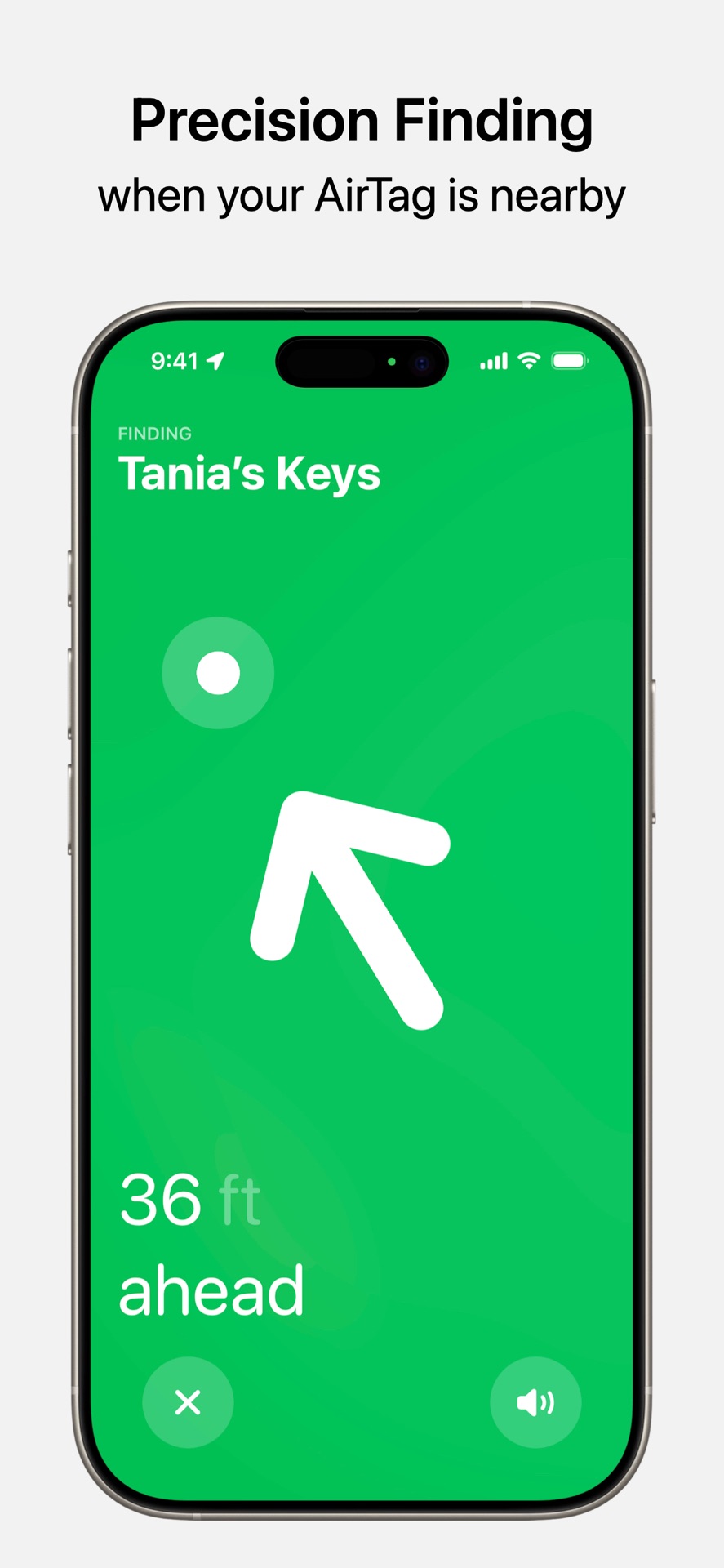
Once the owner is close to the item, the app can offer a different set of tools: sounding the tracker, searching by Bluetooth proximity or, with supported hardware, showing distance and direction using ultra-wideband (UWB). Crowdsourced location reporting and UWB nearby finding solve different parts of the recovery problem.
What Apple, Google and Samsung have in common
All three link an accessory to an owner's account and provide an app for finding it. Location on a map and audible recovery are familiar across the ecosystems. Sharing, lost-item contact information and unwanted-tracking protections also matter, although the exact controls and accessory requirements vary.
A brand's return rate can be affected by details that look minor on a specification sheet: whether setup is clear, whether the card can be heard inside a wallet, and whether a returned unit can be removed from the previous owner's account. These deserve the same attention as color, thickness and battery life during sample approval.
The platform programs require privacy and unwanted-tracking behavior as part of the accessory experience. Product teams need to account for those requirements in the sounder, controls, instructions and support process. Validation must cover the final branded product and its approved configuration.
Apple Find My: for brands serving iPhone users
Apple Find My gives a compatible branded accessory a place in the Items tab of an app Apple customers already use. That is a practical advantage for an iPhone-focused wallet, luggage or everyday-accessory range: the customer can add the item without installing the brand's own finding app.
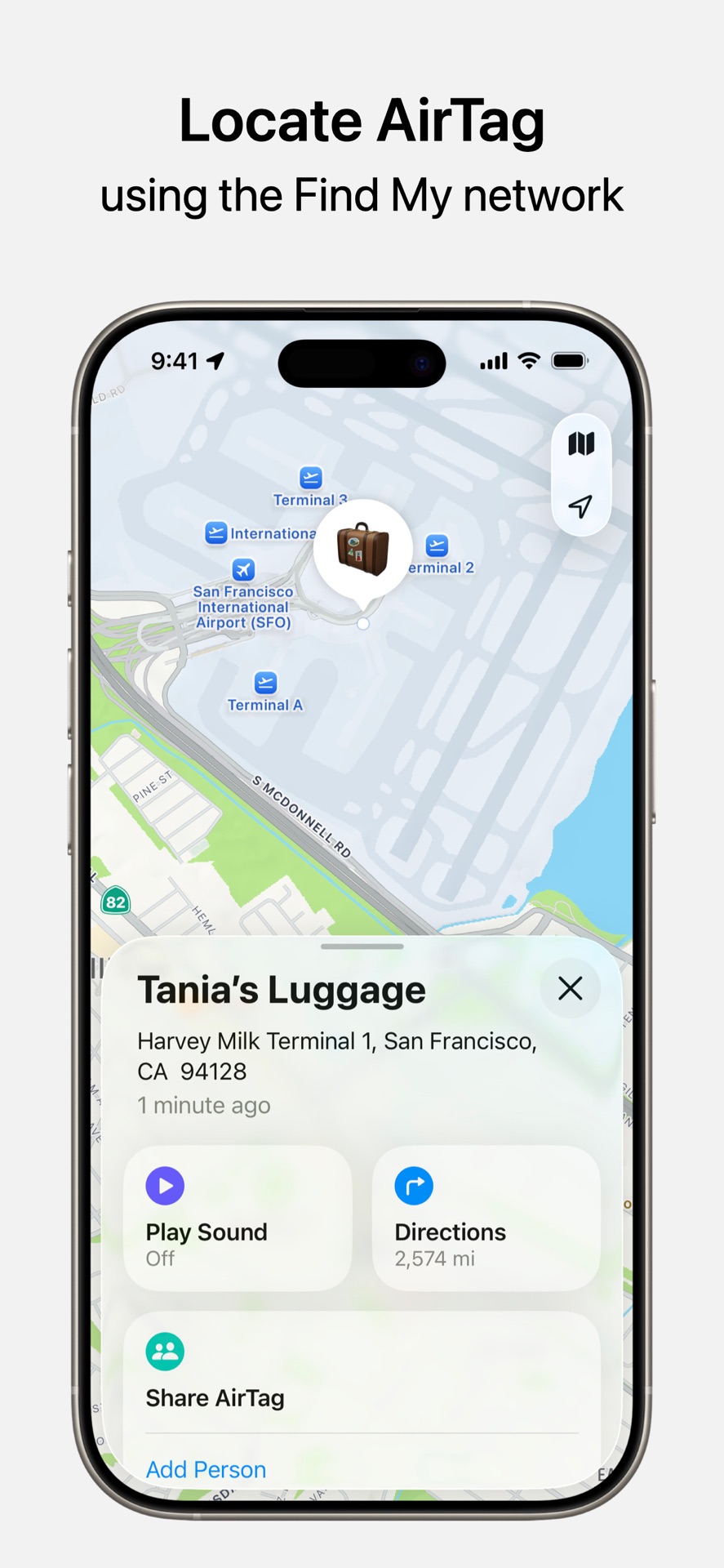
Compatible Find My accessories can appear on a map and play a sound. Apple's app also supports sharing eligible items and displaying contact information for a lost item. Temporary Share Item Location is a separate feature for recovering a missing item, including with participating airlines. Availability must be checked for the accessory and software versions in the launch plan.
Precision Finding needs particular care in a brand's specification. Apple's AirTag experience does not establish what a third-party Bluetooth card can do. A BLE-only card may provide network location and sound without AirTag-style distance and directional guidance. Product photography and packaging should reflect the functions of the actual accessory.
Apple makes the technical resources for Find My network accessories available through its MFi Program. The brand and its development partner should agree who handles the program, product approval and packaging before the design is released. For a thin tracker card, the engineering work includes antenna placement, sound output, battery integration and a reset method the customer can use after the card is sealed.
Google Find Hub: for a broader Android customer base
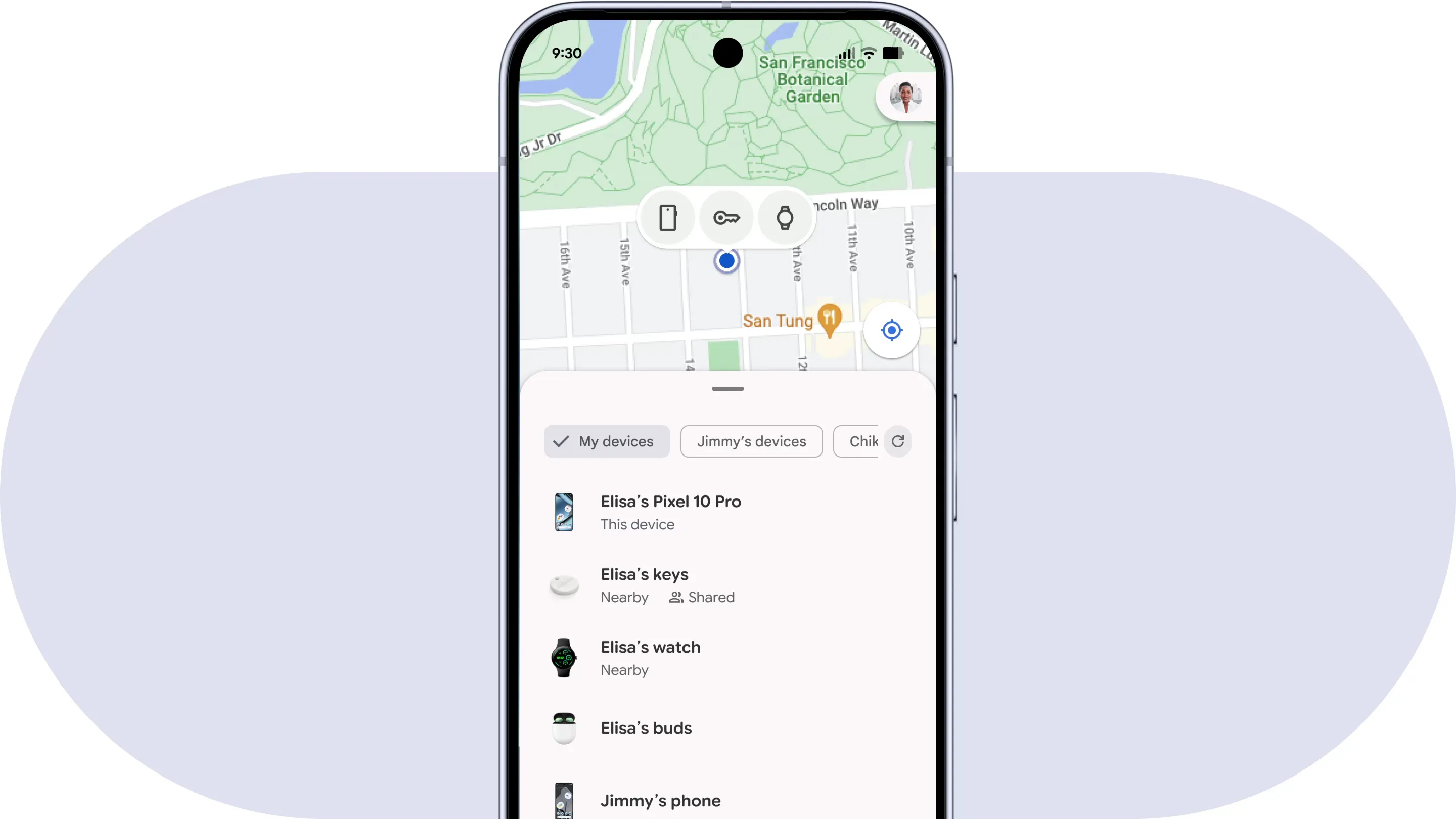
Google Find Hub is the current name of Google's finding service, previously known as Find My Device. Compatible tracker tags use the Android finding network and are added to Find Hub after pairing. For a brand selling across several Android phone manufacturers, it offers a wider potential phone audience than a Galaxy-specific accessory.
Google provides map location, sound and sharing for supported accessories. UWB nearby finding is available with compatible tags and phones; both ends need the necessary hardware and software. Some Galaxy phones can use Google's Find Hub too. Choosing a Google-compatible tracker and choosing a SmartThings Find-compatible tracker are separate decisions, even when the customer owns a Samsung phone.
Google's network settings affect how devices contribute reports. Its privacy safeguards include location aggregation under the high-traffic network setting, alongside an option to participate in all areas. As a result, a brand should evaluate recovery in the intended use conditions rather than predict update speed from the total Android installed base. A crowded transport hub and a quiet storage area may produce different results.
Google's partner process covers a device proposal and Model ID, agreements and onboarding, implementation, self-testing, marketing review, third-party laboratory certification and shipping approval. The brand's launch schedule needs to allow for those stages. A chip supported by the ecosystem is a starting point; the complete product still has to pass the applicable process.
For a mixed retail range, the online listing and box should identify Find Hub compatibility plainly. "Works with Android" on its own leaves too much uncertainty about phone versions, Google service availability and any UWB requirement.
Samsung SmartThings Find: Galaxy-focused item recovery
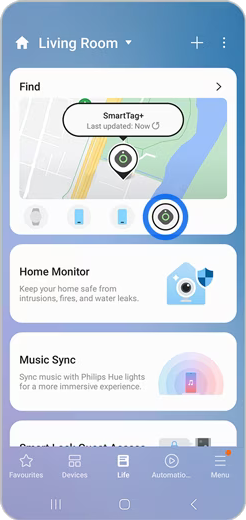
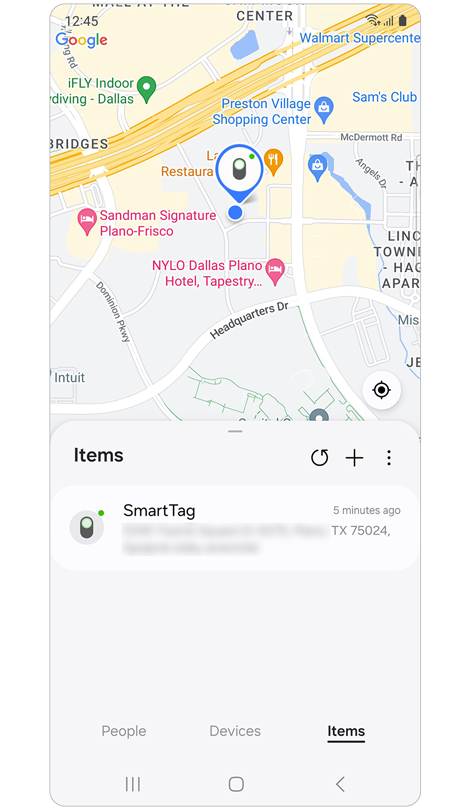
Samsung SmartThings Find is relevant to brands serving Galaxy users. Samsung's SmartTag products use participating Galaxy devices for offline finding. The owner can check a location, ring a nearby tag and use supported nearby-search functions through Samsung's finding experience. Samsung Find is also available on supported Galaxy devices; the exact app flow depends on the device and software version.
The distinction matters at the point of sale. Installing SmartThings on another manufacturer's Android phone does not give that phone the same SmartTag support as a compatible Galaxy device. A Galaxy-focused range can be commercially sensible, but its compatibility statement needs to name the supported phones clearly.
Samsung's own SmartTag2 illustrates several possible differentiators: UWB Compass View with compatible Galaxy hardware, NFC-based lost-item contact information, and a button that can trigger configured SmartThings actions. These are features of that product. A custom branded tag needs its own supported feature set; SmartTag2's enclosure rating, battery life and controls do not automatically carry over.
Samsung's SmartThings Find Partnership Program provides a device specification, Device SDK and testing resources for commercial accessories. BLE and BLE-plus-UWB profiles are distinct choices. For a brand commissioning development, the early decision is whether standard Bluetooth recovery meets the product brief or whether the intended customer experience justifies UWB's additional hardware and integration work.
The prototype review should include the Galaxy models the brand expects customers to own, with setup, ringing, account removal and any claimed direction-finding function tested on those devices.
Feature comparison for brand product teams
| Decision point | Apple Find My | Google Find Hub | Samsung SmartThings Find |
|---|---|---|---|
| Customer phone compatibility | Compatible Apple devices | Compatible Android devices with the required Google services, including supported Galaxy phones | Compatible Galaxy devices; SmartThings availability alone does not establish tag support |
| Main app experience | Find My, Items tab | Google Find Hub | SmartThings Find; Samsung Find on supported Galaxy devices |
| Network principle | Apple devices detect Bluetooth signals from missing items and help report approximate location | Android devices help locate compatible devices and tags through Google's finding network | Galaxy devices and SmartThings Find help locate Galaxy devices and SmartTag products |
| Sound and nearby search | Sound on supported accessories; AirTag Precision Finding is not a default feature of third-party BLE cards | Sound and nearby finding; UWB distance and direction require a compatible tag and phone | Ring and Search nearby; SmartTag2 Compass View requires supported UWB hardware |
| Sharing and lost-item recovery | Item sharing and lost-item contact functions; temporary location sharing for eligible items | Accessory sharing and supported lost-item features; current Find Hub also supports airline sharing | Sharing and lost-item tools vary by product; SmartTag2 provides NFC contact information |
| Program route | Find My network accessory program through Apple MFi | Find Hub partner onboarding, Model ID, implementation, testing and certification route | SmartThings Find Partnership Program, Device SDK and platform test route |
| Brand's product range | iPhone-focused cards, tags and compatible embedded accessories | Cards, tags and compatible embedded accessories for Android users | Galaxy-focused tags and compatible partner accessories |
| Launch decisions | Supported functions, MFi responsibilities, brand approval and packaging | Phone and market coverage, Model IDs, certification and marketing approval | Galaxy compatibility, partner profile, supported functions and launch market |
| Hardware work | BLE, acoustic design, battery, button, RF, card or tag structure | BLE, battery, buzzer, RF, onboarding behavior, product form | BLE, UWB where applicable, buzzer, button, battery and enclosure |
Phone compatibility should lead the product listing, followed by nearby-finding functions, battery life, dimensions and durability. For a switchable model, the listing also needs to explain which networks it supports and how the customer selects one.
Multi-ecosystem products need careful planning
For a brand selling to both iPhone and Android users, ecosystem coverage affects inventory as well as electronics. Possible approaches include separate Apple, Google or Samsung variants, or an approved switchable product where the supported implementation allows it. Shared hardware can reduce duplication, but each claimed ecosystem still requires its own integration and approval.
Separate variants can make setup and packaging easier to explain. A switchable product can simplify stocking, but the reset, account removal and selection process must be clear. "Compatible with Apple and Google" does not necessarily mean both networks operate at the same time. The product specification should state which combinations are supported and how the customer changes between them.
The same clarity is needed in online retail. Product names, variant selectors, quick-start instructions and support articles should agree on compatibility. A common enclosure or identical product photo can otherwise conceal a difference that determines whether the customer's phone can use the tracker.
Yuli can review the feasibility of a shared hardware design against the brand's intended variants, volumes and launch requirements. That review includes the battery, radio profile, onboarding controls and production test for each configuration.
What the ecosystem decision changes inside the product
Battery life depends on the approved radio settings and expected use: Bluetooth advertising, connection events, nearby search and ringing all draw power. Storage before sale matters too. A sealed card needs enough capacity for its intended service life, while a rechargeable card adds a charging circuit and charging instructions. These choices affect thickness, cost and after-sales support.
Audible recovery needs testing in the intended use case. A sounder that is clear on an exposed board can be much quieter inside a laminated card tucked into a wallet. The sound path, adhesive, surface material and finished assembly all affect output. A tag offers more space, but water-resistant construction can also restrict sound.
Radio performance needs checking after final assembly. The battery, metal parts, printed finishes, charging coil and any display can affect the antenna. For a wallet card, testing should include typical wallet contents; for an embedded module, it should use the host product's enclosure and power supply. An open-board range measurement does not establish finished-product performance.
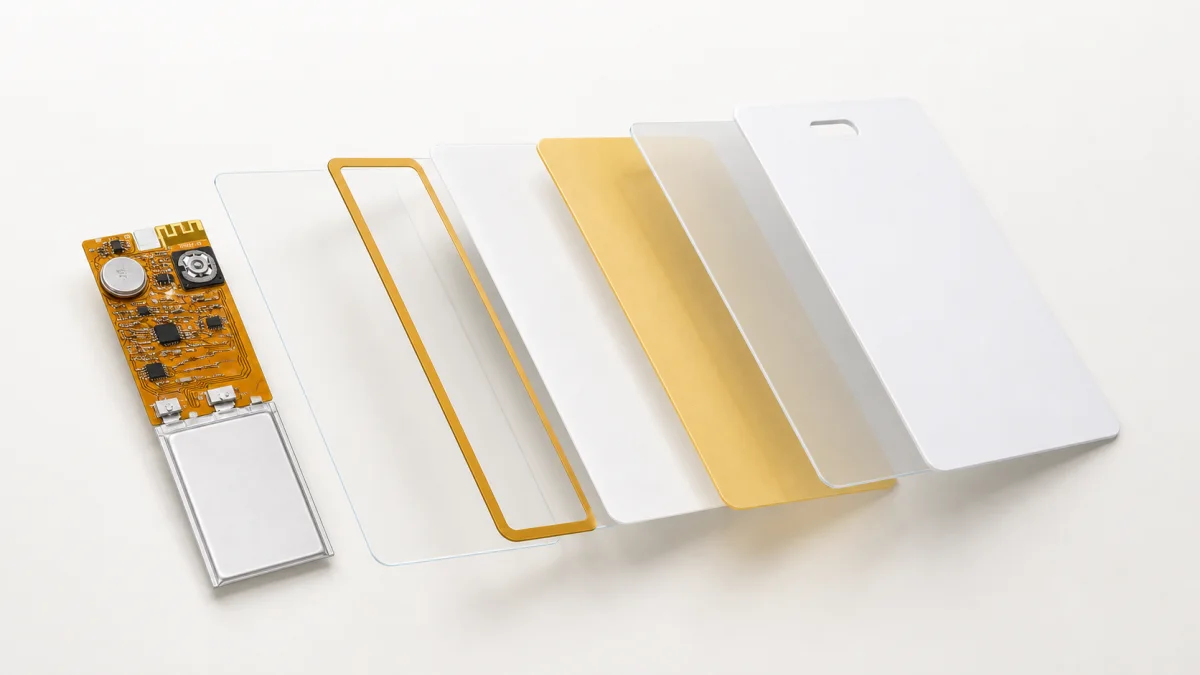
In cold-pressed smart card manufacturing, the PCBA, thin battery, sounder, controls and surface layers must fit within the agreed thickness while retaining flatness and durability. Pilot builds check assembly consistency and final electrical performance. For a molded tag or embedded module, the enclosure, antenna clearance and connections need their own production checks.
Yuli tracker product matrix for brands
Yuli develops tracker hardware for customer-owned brands, from wallet cards and key tags to display cards and embedded assemblies. The product examples below show how the application changes the engineering and manufacturing work.
| Product format | Branded applications | Yuli customization | Design considerations |
|---|---|---|---|
 Standard tracker card Standard tracker card |
Wallets, cardholders and travel accessories where the tracker needs to fit a card pocket. | Low-power BLE hardware, battery and sounder integration, printed card surfaces, and cold-pressed card manufacturing. | Card thickness, service life, audible recovery inside a wallet, and antenna performance after lamination. |
 Bluetooth tracker tag Bluetooth tracker tag |
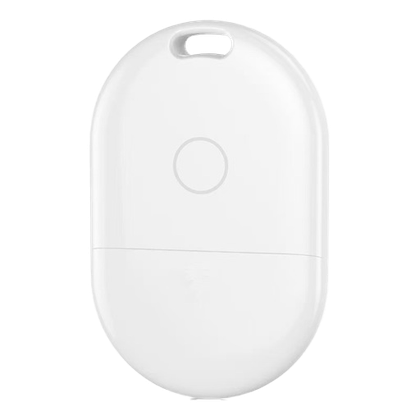
Key rings, bags and luggage accessories with a clip, loop or attachment point. | Tracker PCBA, power supply, button and sounder integration within the brand’s enclosure, plus certification support and pilot builds. | Battery access, attachment strength, acoustic openings and the enclosure’s effect on radio performance. |
 Light-energy tracker card Light-energy tracker card |
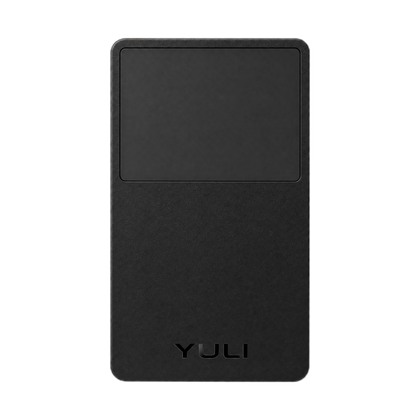
Light-exposed card holders and luggage accessories designed to reduce battery maintenance. | Photovoltaic and energy-storage integration, low-power tracker electronics, collection-window layout and thin card manufacturing. | Available light, time spent covered, storage capacity and energy used for ringing. A closed wallet provides little charging light. |
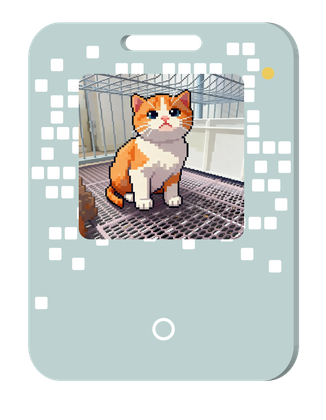 E-paper smart card or tag E-paper smart card or tag |
Display-equipped luggage tags and identification cards with an item-recovery function. | Electronic-paper display integration, BLE hardware, battery and controls, and card construction around the protected display window. | Display refresh method and energy, readable content and screen protection. Display updates need their own implementation; a finding app is not a general display editor. |
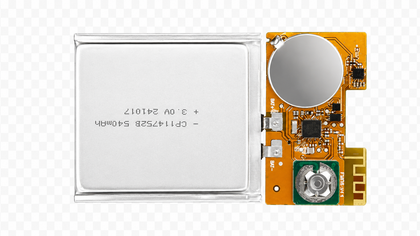 Embedded tracker PCBA Embedded tracker PCBA |
Finding built into the brand’s existing accessory, rather than a separate tag. | Custom board layout, power and control interfaces, antenna and acoustic integration. Customer-supplied boards can also be assessed for cold-pressed card integration. | Space and antenna clearance in the host product, power availability, reset access and finished-product testing. |
These are customizable product formats, not a list of universally compatible retail models. Apple Find My, Google Find Hub or Samsung SmartThings Find integration is specified for each project and approved configuration. The selected platform requirements still apply to the complete accessory.
For example, a wallet brand may prioritize a thin, sealed tracker card, while a luggage brand may need a tag with an accessible battery or a display for identification. Yuli adapts the electronics and manufacturing to that product brief; the brand retains control of product design, appearance and channels. Explore Yuli’s customizable product range.
A practical RFQ checklist
For a brand commissioning an OEM tracker, a useful brief identifies the customer, the expected finding experience and the physical limits. The following information lets Yuli assess the appropriate design and manufacturing work.
| RFQ item | What Yuli needs to know |
|---|---|
| Target ecosystem | Apple Find My, Google Find Hub, Samsung SmartThings Find, or a staged SKU plan |
| Target market | Countries, channels, language needs and compliance expectations |
| Product form | Tracker card, tag, e-paper card, embedded PCBA or another accessory form |
| Brand ownership | Customer brand, white-label plan, packaging responsibility and platform account responsibility |
| Battery target | Replaceable, rechargeable or sealed battery, lifetime target and thickness limits |
| Sound requirement | Buzzer need, expected loudness, sound hole limits and enclosure constraints |
| Nearby finding expectation | Whether UWB or precision direction features are expected, and on which phones |
| Mechanical limits | Size, thickness, bending, waterproofing, hole position, button position and surface finish |
| Certification plan | Platform route, RF compliance, battery documents and market-specific requirements |
| Production stage | Concept, prototype, sample validation, pilot run or mass production |
An existing product drawing, a target phone list and the intended feature claims are useful attachments. Where a specification is still open, Yuli can assess the trade-off during the engineering review.
How Yuli supports ecosystem tracker projects
Yuli's role is to help turn the ecosystem decision into manufacturable hardware. Customers define product positioning, industrial design, brand, sales channel and market requirements. Yuli supports solution customization, hardware engineering, component evaluation, low-power review, antenna and acoustic integration, certification support, samples, pilot builds, production testing and cold-pressed card manufacturing.
Before the brand commits to tooling, Yuli can review whether the proposed form factor supports the agreed functions. A tracker card requires particular attention to the thin battery, sounder and antenna after cold pressing. A tag or embedded module has different enclosure and power constraints. Sample builds and pilot production test the chosen construction before volume manufacturing.
Questions from brands developing a tracker range
Does a finding-network tracker need GPS or a SIM card?
Not for the normal Apple Find My, Google Find Hub or Samsung SmartThings Find accessory model. The tracker uses Bluetooth Low Energy and relies on participating devices in the selected network to relay a location report. Adding cellular or GNSS would create a different product, power budget and service model.
Can our brand offer one tracker for several ecosystems?
Potentially, with a supported and approved implementation. Separate variants and switchable products have different setup, inventory and support implications. Define the supported networks, whether operation is simultaneous or selected, and what reset or account-removal steps are required. A common board does not by itself establish three-network compatibility.
Which ecosystem best fits our customers?
Use the phone mix in your intended market and sales channel. An iPhone-focused accessory range points toward Apple Find My. A broader Android range points toward Google Find Hub. A product aimed specifically at Galaxy users may suit Samsung SmartThings Find. Then test the functions the brand intends to advertise on representative customer phones.
Can we advertise precision finding on a thin Bluetooth card?
Only if that card's approved implementation supports it on the stated phones. Bluetooth sound or proximity search and UWB distance-and-direction guidance are different capabilities. Card thickness alone cannot establish either feature; the radio, antenna, software and platform support must match the claim.
Discuss your branded tracker with Yuli
Planning a tracker card, tag or an accessory with built-in finding? Yuli can assess the hardware and manufacturing requirements for your brand, from initial samples through pilot production and volume builds.
Send Yuli your product brief with the intended ecosystem, customer phones, product dimensions, battery target and expected volume. Include any drawings and the functions you plan to advertise so the engineering review can address the actual product.