Antenna and link
Check detuning, radiation direction, RSSI, packet loss, and link stability at target distance. Finished-product data reveals effects from encapsulant, face sheets, and battery placement.
S11 / RSSI / PER / range Yuli Intelligent
Resource / Finished-Product Validation
Cold-pressed cards and smart cards need finished-product validation. Encapsulant, face materials, battery placement, buzzer cavity, and local stack-up can change RF, acoustic, and dimensional performance.
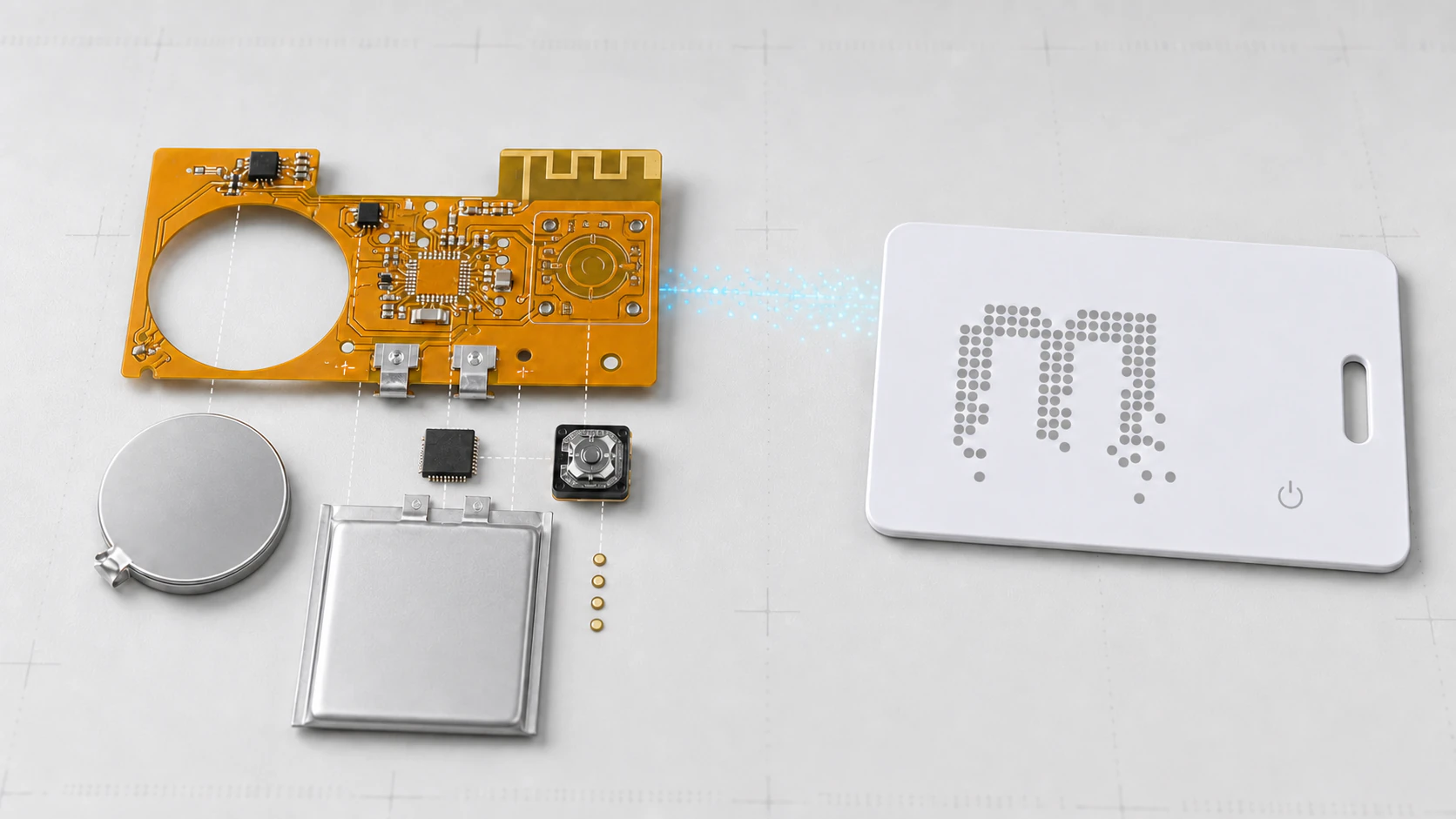
Test Controls
Changing firmware, battery, antenna matching, or test distance removes comparability. Each record should include sample ID, hardware and software revisions, material lot, date, and environment.
Record RF, NFC, acoustics, and component height with locked firmware and supply.
Repeat the same tests with final face sheets, encapsulant, sound opening, and stack-up.
Retest after project-defined temperature, humidity, bend, drop, or water exposure.
Test Plan
Select tests by product configuration. Omit NFC or buzzer tests when those modules are absent, and separate BLE conducted measurements from finished-product radiated tests.
Check detuning, radiation direction, RSSI, packet loss, and link stability at target distance. Finished-product data reveals effects from encapsulant, face sheets, and battery placement.
S11 / RSSI / PER / rangeRecord phone or reader, card face, angle, distance, and success rate to verify that coil location, metal parts, and face material preserve coupling.
distance / angle / success rateMeasure at fixed distance, background noise, and drive condition to compare effects from sound opening, cavity, and encapsulant coverage.
SPL / frequency / distanceCreate a multi-point thickness map across center, corners, and critical components, with warpage, local protrusion, and edge consistency.
9-point map / warpage / edgeTest Record
For each sample lot, record measured values, equipment, test conditions, raw-record ID, before-and-after difference, and the project criterion.
| Item | Before | After | Delta | Criterion |
|---|---|---|---|---|
| BLE RSSI / PER | Measured value | Measured value | Δ | Target range and use case |
| NFC | Distance/success rate | Distance/success rate | Δ | Named device and card face |
| Buzzer SPL | dB(A) | dB(A) | Δ dB | Distance, noise, and pattern |
| Thickness/warpage | mm | mm | Δ mm | Drawing tolerance and map |
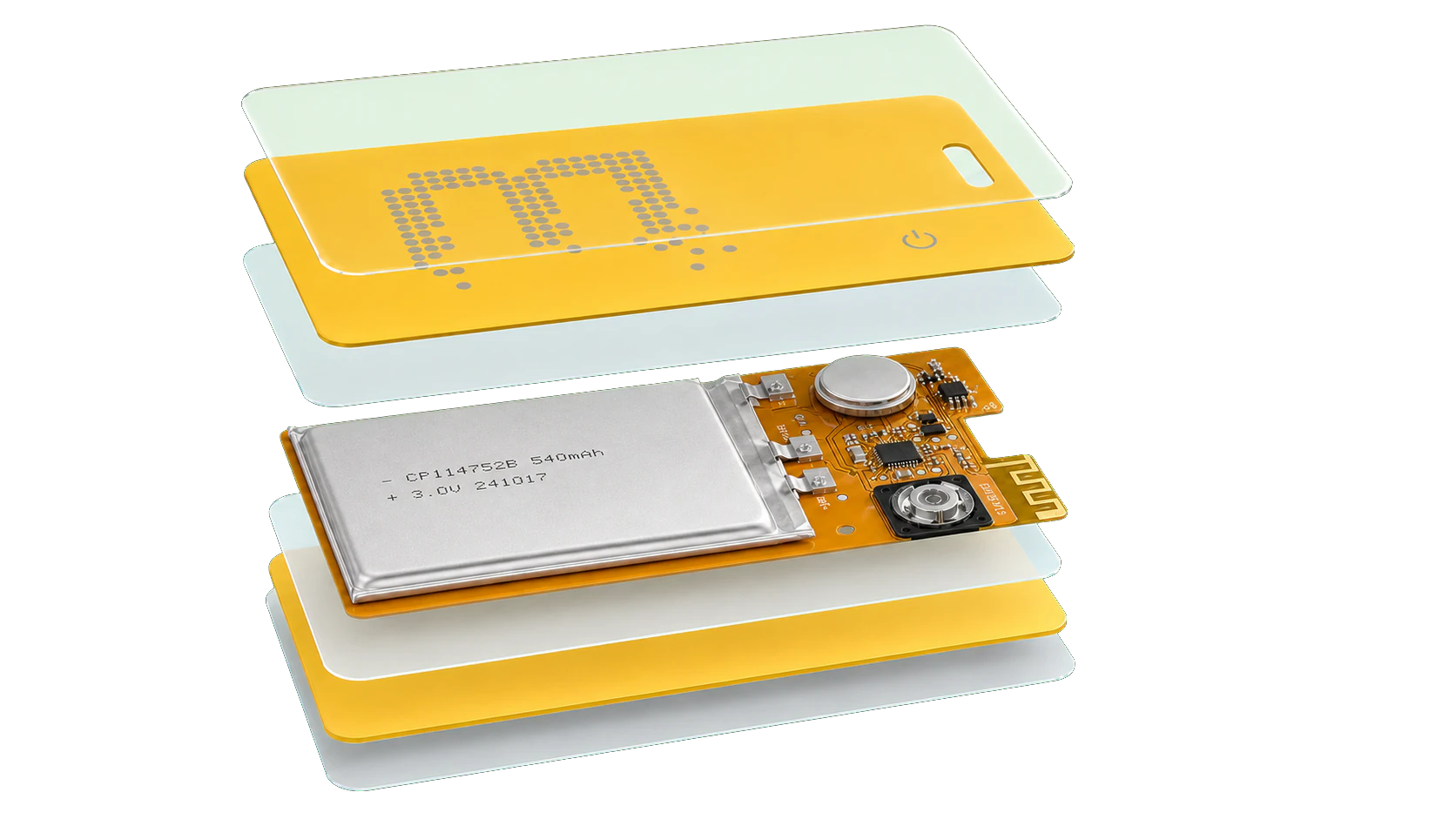
Acceptance Rules
Standard tracker cards, smart badges, display cards, and asset labels have different range, SPL, thickness, and reliability requirements. Customer drawings, target devices, mounting, and environment should be written into the acceptance criteria.
Share drawings, ecosystem, antenna and NFC configuration, buzzer requirement, thickness target, user devices, and reliability conditions. Yuli will use them to prepare prototype and production validation plans.
Field Test Recorder
Data remains in the current browser. Generate a summary or export a CSV for working records; formal disposition follows the project test report.