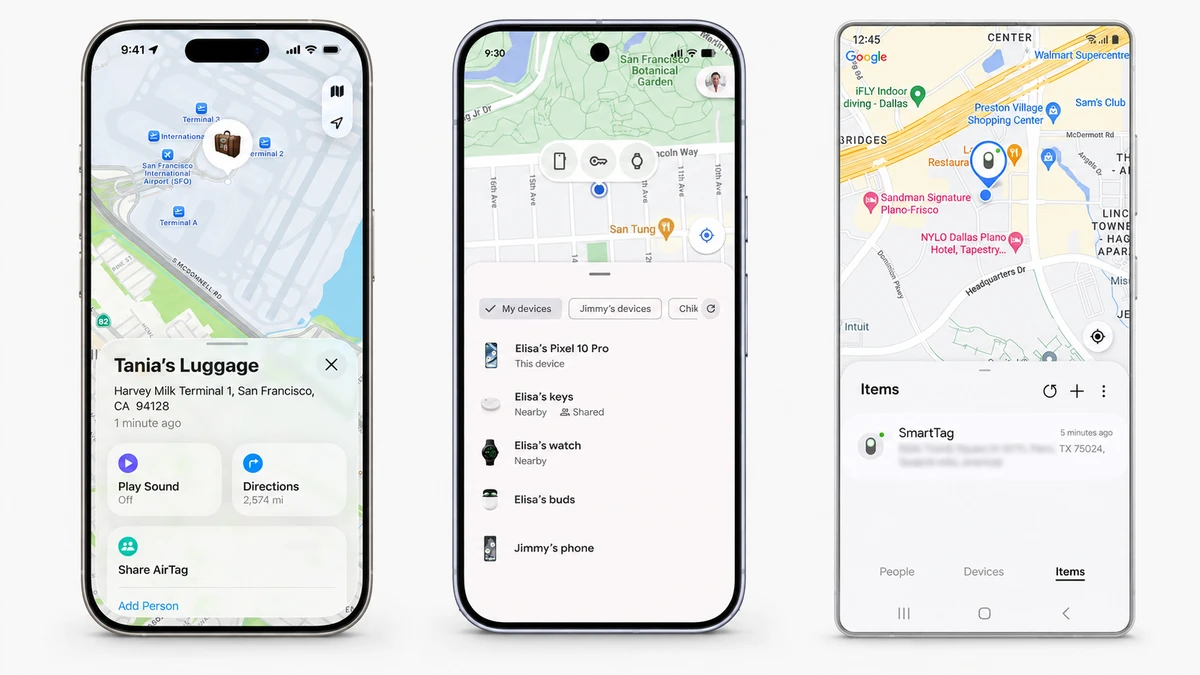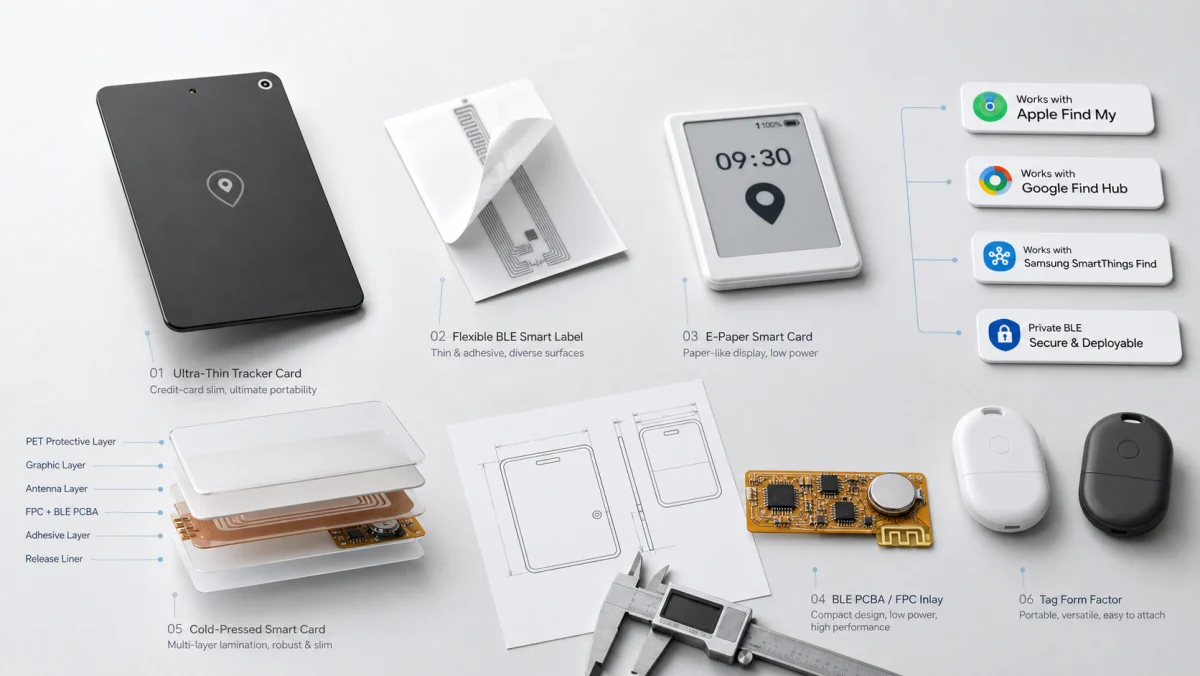
Tracker projects often begin with questions about chipset cost, card thickness, or battery capacity. The more consequential decision is who will use the product, where it will be sold, and which platform process the brand is prepared to follow. Apple Find My, Google Find Hub, and Samsung SmartThings Find all help users locate belongings, but they are not three interchangeable apps that can be selected at the end of manufacturing. Each route shapes firmware, security, product interaction, approval, and production data.
Ecosystem selection is customer selection
Apple Find My is the natural route when the target audience is primarily on iPhone. Google Find Hub deserves priority for a broad Android audience. Samsung SmartThings Find has a clear fit when the channel and customer base are concentrated around Galaxy users. Brands should use their own market and channel data rather than treating global installed-base figures as a substitute for customer definition.
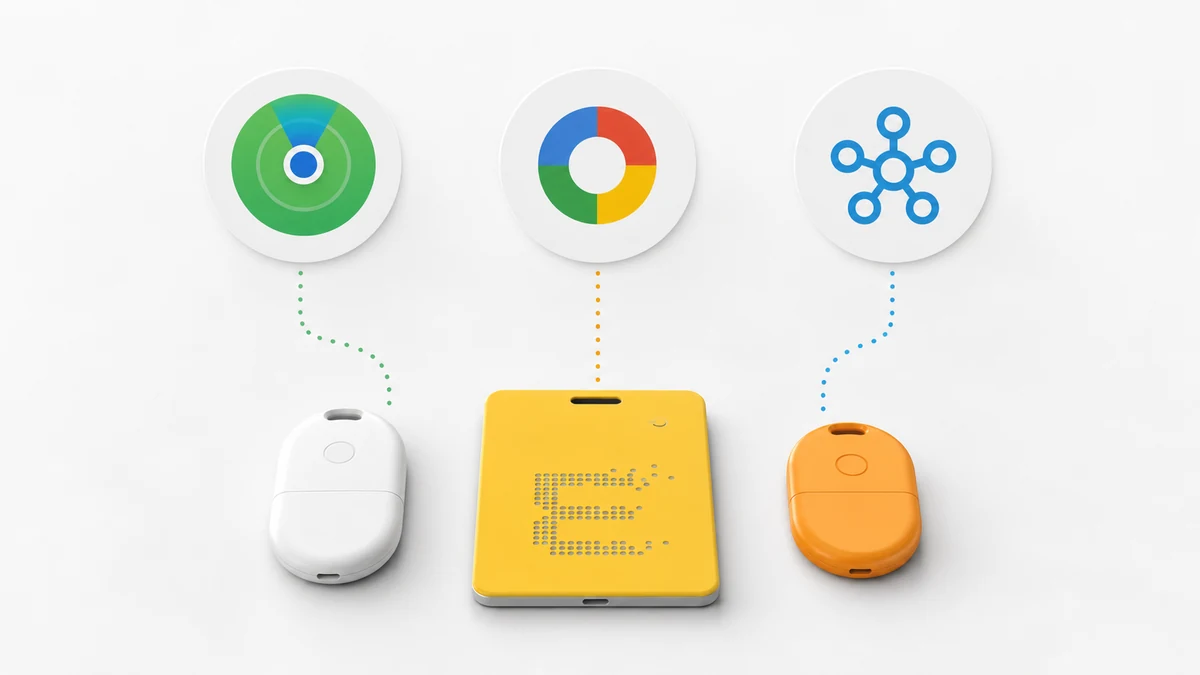
The project entry point is different for each route
Apple states that developers and manufacturers connecting accessories to the Find My network enroll in the MFi Program for the required specifications and resources. Google’s public partner guide lays out specification review, device proposal, agreements, onboarding, firmware and self-test, marketing review, third-party certification, and shipping approval. A Samsung program is planned around the Galaxy and SmartThings Find experience and the applicable partnership requirements.
The brand therefore needs to define the applicant, project owner, model plan, markets, and documentation responsibilities before hardware is frozen. Platform access is part of product definition, not paperwork added after manufacturing.
Product form turns platform requirements into mechanical constraints
A key-ring tag has room for a larger sound path and replaceable cell. A standard tracker card trades battery area, button feel, acoustics, and BLE antenna space against thickness. A light-energy card adds photovoltaic and storage constraints, while an e-paper card adds a display window and refresh budget. The same ecosystem does not lead to the same hardware in every form.
| Input | Decision |
|---|---|
| User and market | Primary phone ecosystem, launch countries, channel, and timing |
| Product form | Card, tag, label, e-paper product, or embedded module |
| Interaction | Button, ringing, state indication, reset, and disablement |
| Power | Primary cell, rechargeable thin cell, harvesting, and battery-life target |
| Program | Application, firmware source, self-test, lab, packaging, and marketing review |
Battery life cannot be separated from the platform state machine
A tracker spends most of its life sleeping or advertising, but pairing, identity rotation, connections, ringing, button events, recovery, and manufacturing tests create different peaks. Platform behavior affects advertising, security processing, and interaction. Build the energy model from the selected ecosystem and final hardware, then measure a representative finished product.
A multi-ecosystem product family is not the same as simultaneous compatibility
A brand can plan Apple, Google, and Samsung variants that share industrial design and parts of the supply chain. Model data, firmware, device identity, packaging badges, and approval records still need separate control. Any claim that one device can switch ecosystems must be based on current platform rules, the selected chipset, and formal project confirmation.
Define users and markets, select the ecosystem and program owner, freeze the product form and chipset/firmware route, and then complete low-power design, mechanics, certification, pilot production, and cold-pressed manufacturing.
How Yuli participates
The customer owns product definition, industrial-design direction, brand, and channel. Yuli can support tracker hardware, firmware adaptation, certification preparation, prototypes, pilot builds, and integration of the PCBA, battery, button, acoustics, photovoltaic element, or e-paper module into a cold-pressed card. Platform access, badge use, and shipping approval remain subject to Apple, Google, Samsung, or their approved partners.