Engineering Prototypes
Validate function, power, wireless, acoustics, structure, and critical use states with hardware, firmware, and sample IDs recorded.
 Yuli Intelligent
Testing capabilities
Yuli builds project test plans for cold-pressed cards, FindMy trackers, smart badges, and asset labels across electronics, wireless, acoustics, structure, finish, and reliability.
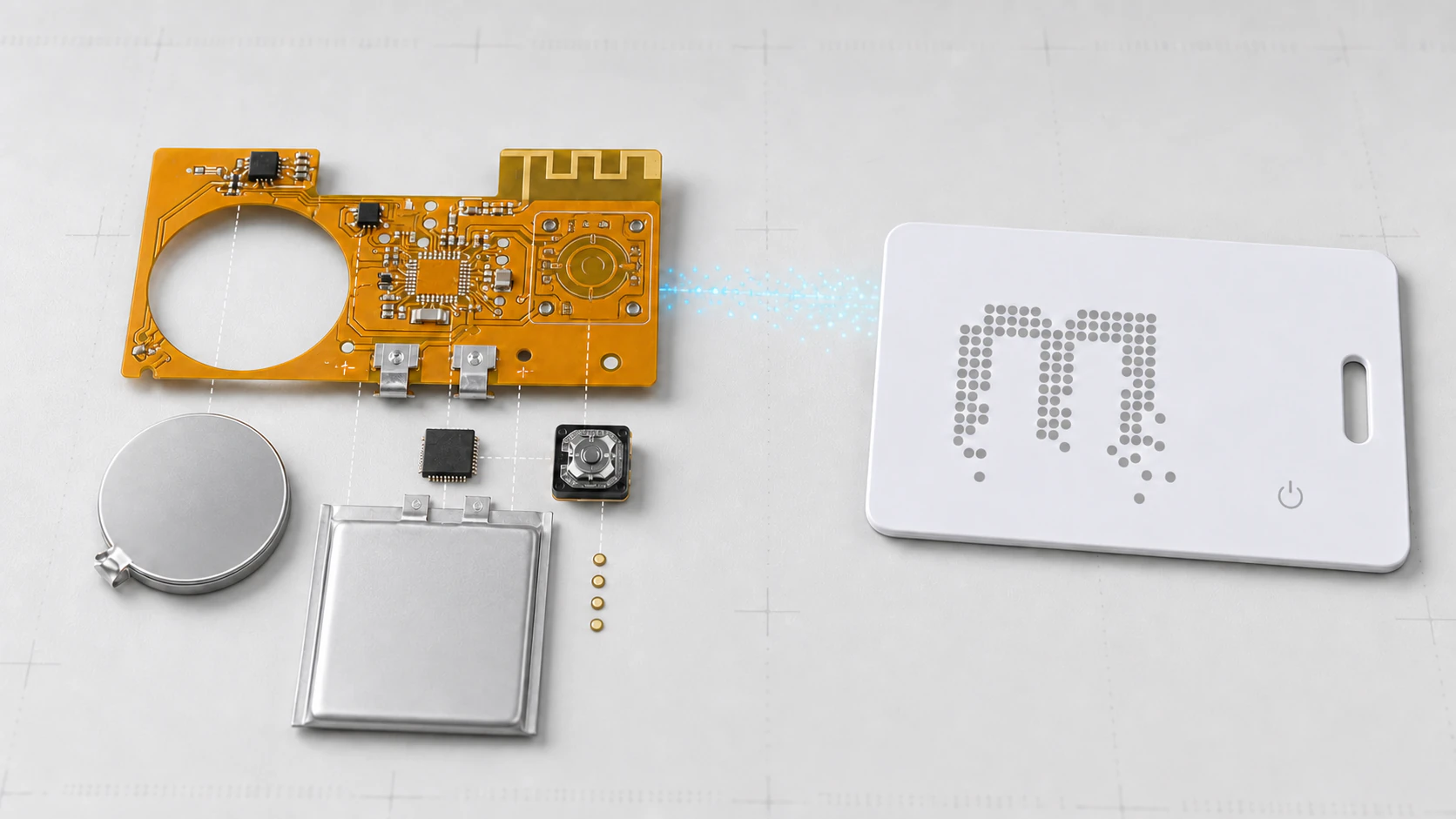
| Function and power | Power-up, pairing, advertising states, sleep, ringing, display refresh, buttons, and battery state with hardware, firmware, and environment recorded. |
|---|---|
| BLE / NFC / RF | Antenna matching, read or connection behavior, pre/post press comparison, and device orientation using project-defined methods. |
| Acoustics and controls | Buzzer output and consistency, sound-port influence, button travel, and false-trigger risk. |
| Structure and finish | Length, width, thickness, local protrusions, flatness, windows, edges, surface, and print consistency. |
| Reliability | Select bending, drop, pressure, abrasion, temperature/humidity, ingress, or cleaning resistance by use case; levels and conditions require project confirmation. |
Yuli handles engineering validation and production inspection for prototypes, pilot builds, and outgoing lots. Where ecosystem onboarding, regulatory approval, or a specified standard applies, Yuli prepares controlled samples and technical documents for an approved third-party laboratory.
Validate function, power, wireless, acoustics, structure, and critical use states with hardware, firmware, and sample IDs recorded.
Turn approved methods into production checks, with lot consistency, sampling results, and change-driven retesting recorded.
Prepare the controlled test revision, samples, and technical files; the relevant laboratory or platform issues the formal result.
Record product, sample ID, hardware and firmware revision, battery, date, environment, method, equipment, raw data, acceptance criteria, and conclusion. Retest scope follows the impact of each change.
Share the target specification, use case, test standard, sample size, acceptance limits, report format, and third-party laboratory requirements.